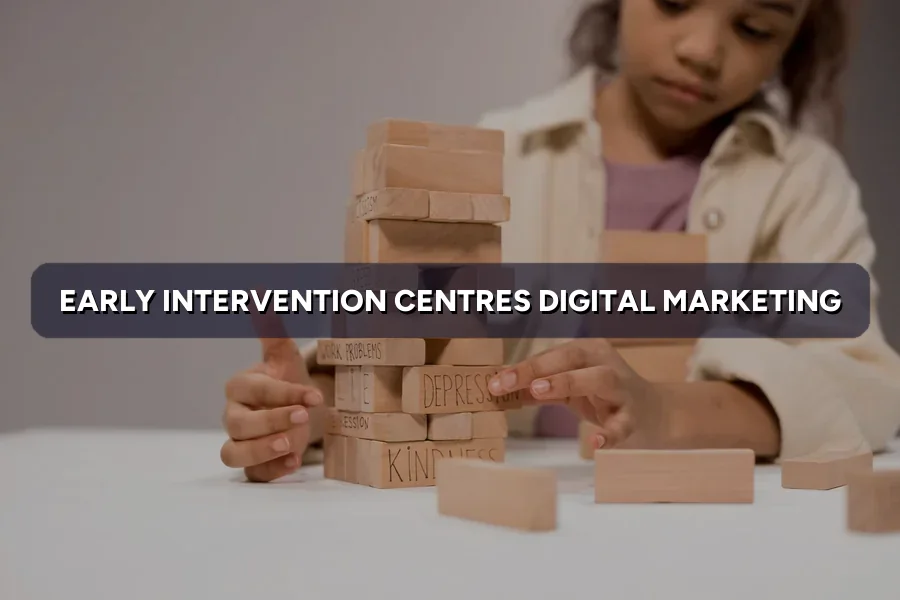
A paediatrician says the words “developmental delay” on a Tuesday morning. By Tuesday night the mother has read forty pages, cried twice, and opened a WhatsApp window she has not yet sent. She is not deciding whether to get help. She is deciding who is real.
Most marketing advice written for therapy practices comes from countries with insurance codes, waiting lists and referral systems that hand you the family. Malaysia hands the family a diagnosis and very little else, and the parent works out the rest alone.
If you run an early intervention centre, a child development centre or a paediatric therapy practice anywhere in Malaysia, this guide applies the IZI Blueprint — the four-phase method we use in consulting engagements — to digital marketing for early intervention centres. It starts with the market that parent is actually walking into.
Why doctor referrals still decide who fills a caseload
Source video: How to Get Referrals from Doctors to Grow Your Private Practice
PART 2 · THE MARKET
What Malaysia’s Early Intervention Market Looks Like in 2026
IN BRIEFBadly undersupplied, and the families know it. Registered demand for under-sixes runs into five figures while registered specialist places run into double digits, which puts local search visibility ahead of persuasion in almost every district.
As of July 2026, about 17,000 children with disabilities under the age of six were registered with the Social Welfare Department, roughly 13,500 of them in the learning disability category, Bernama reported in August 2026. Against that, eleven specialised childcare centres are registered nationwide.
- Scarcity sets the tone. Families relocate between states for a place; one Penang family moved to Putrajaya for a single centre.
- Parents arrive exhausted. By the time they find you, three different people have told them to figure it out alone.
- Your catchment is wider than you assume. Unlike an ordinary childcare centre, families will drive forty minutes each way.
- Nobody publishes a price. The first centre that does becomes the reference point everyone else gets measured against.
PART 3 · DIAGNOSE
How Malaysian Parents Find a Centre After a Diagnosis
IN BRIEFFast, frightened and mostly at night. The trigger is a clinical appointment rather than idle browsing, which compresses the whole journey into days — far shorter than choosing a kindergarten, where parents plan a year ahead.
Five steps, and the first four often happen within a fortnight of the appointment.
- A professional names it. A paediatrician, clinic nurse or preschool teacher raises a concern. The parent leaves with a term, not a plan.
- She searches the diagnosis, not the service. “Autism therapy”, “speech delay 3 year old”, “lambat bercakap”. Your name means nothing yet.
- She asks a parent group. Facebook groups and WhatsApp chats carry more weight here than any advertisement will.
- She checks two or three centres properly. Qualifications, registration, session length, fees. Most of the shortlist dies here.
- She messages the one that felt safest. Usually on WhatsApp, usually after 9pm, usually apologising for the hour.
Enquiries arriving, but few turning into assessments?
That gap almost always sits in what your pages fail to prove, not in how many people see them. Meet IZI Digital Marketing
PART 4 · DIAGNOSE
Where Centres Lose Parents Between Referral and First Session
IN BRIEFSix leaks, and the anonymous-therapist one costs most. The same silence drains enquiries from a special needs centre, except here the parent is days from a diagnosis and reading everything twice.
Open your own site on a phone and read it as a parent who cried this morning.
- Therapists unnamed. No names, no qualifications, no registration bodies. A parent cannot tell a trained therapist from a helper.
- No registration stated. Your JKM position is the fastest credibility signal you own, and most centres bury it.
- Programme structure missing. Session length, frequency, group or individual, progress reporting. Without these you are selling hope.
- No fees, not even a range. She is budgeting a multi-year commitment on one income. Silence reads as unaffordable.
- Nothing about what happens first. Parents fear the assessment more than the cost. Describe it step by step.
- A reply two days later. These messages arrive at night, from someone who finally found the courage.
PART 5 · DESIGN
Which Channel Deserves Your First Ringgit?
IN BRIEFUsually the one that catches an existing search rather than the one that creates a new want. Parents in this category are already looking, so map and local search work tends to outperform interruption advertising.
Four criteria decide it: how quickly an assessment gets booked, the monthly floor, whether the channel reaches a parent already searching, and how much of your clinical week it eats.
DECISION BOX · FIRST CHANNEL FOR AN EARLY INTERVENTION CENTRE
| Option | Speed to an assessment | Monthly floor | Reaches a parent who is | Your time |
|---|---|---|---|---|
| Business Profile, programme pages and parent reviews | 3–8 weeks | RM 0–400 | Already searching the diagnosis | Low, but never finished |
| Search ads on diagnosis and therapy terms | Days | RM 1,200+ | Searching tonight, in your district | Low once built properly |
| Parent-education video to families within 15km | 2–6 weeks | RM 800+ | Worried but not yet diagnosed | Medium — needs monthly filming |
| Referral relationships with clinics and preschools | One to two quarters | Time, not ringgit | Being told about you by a professional | High and personal |
Verdict: Publish therapists, registration and fees first; no channel survives without them. Then pick search — listing plus search advertising — if local parents already use the clinical words, or parent-education video if the instinct is still “wait and see”. Referral work runs alongside either, never instead of them.
The trap is broad targeting. A campaign built on the bare word “therapy” will spend most of its money on adults seeking counselling.
PART 6 · DESIGN
Setting a Budget From One Child’s Full Programme
IN BRIEFBudget against the whole programme, not the assessment fee. A child in weekly therapy for two years is worth many multiples of one session — the same arithmetic that governs budgeting at a physiotherapy clinic, stretched over a longer horizon.
Five numbers, in this order.
- Take your real average monthly fee. After sibling rates, subsidised places and the sessions families quietly skip.
- Multiply by months actually attended. Pull last year’s exits. Most centres assume two years and find a median nearer ten months.
- Deduct the cost of delivering it. Therapist hours, room time, materials, report writing. What remains is one family’s true worth.
- Set an affordable cost per enrolment. Pick the share of that margin you will spend, then divide by your assessment-to-enrolment rate.
- Cap spending at your therapist hours. Empty slots set the ceiling, not revenue. A three-month wait sends a frightened parent elsewhere.
Guessing at your average length of stay?
Most centres carry the two-year figure in their heads and discover something much shorter in their own discharge records. See how paid social reaches parents in one neighbourhood
PART 7 · DESIGN
Website, Proof and the Registration Parents Check
IN BRIEFOne booked assessment is the only outcome worth designing for, and your registration is the argument an unregistered operator cannot copy. The credentialling logic mirrors what reassures patients at a GP clinic.
Care centres serving persons with disabilities must be registered under the Care Centres Act 1993 and are monitored by the Social Welfare Department, according to the official MyGovernment portal. Confirm which registration your model falls under, then say so in plain text on your site.
- Registration stated in words. Named authority and category, readable by a parent and a search engine. Not a photographed certificate.
- Named therapists with credentials. Discipline, qualification, years of practice, professional body. Two sentences each is enough.
- A programme page per service. Speech, occupational, behavioural, group readiness — with session length, frequency, ratio and progress reporting.
- A fee range and what it includes. Assessment, report, therapy hour, materials. Ranges are fine; silence is not.
- The first visit, step by step. Who she meets, how long it takes, what she leaves holding. This page removes more fear than any testimonial.
PART 8 · DEPLOY
The First 90 Days, in Sequence
IN BRIEFDiagnose for a fortnight, design for a fortnight, then publish everything free before you buy anything. Sequencing beats speed here, and it is the order we work in with every sector we advise.
How to roll out digital marketing for early intervention centres in 90 days
The order matters more than the pace. Six steps.
- Weeks 1–2: Diagnose. Run the six-point leak audit on a phone, then log who referred every family you enrolled this year.
- Weeks 3–4: Design. Pick the channel from the Decision Box, set the ceiling from your programme maths, and decide who answers after 8pm.
- Weeks 5–6: Publish the pages parents check. Registration, named therapists, a page per programme, a fee range, a described first visit.
- Weeks 7–8: Record three parent-question videos. Late talking, assessment fear, what a therapy hour looks like. Two minutes each, on a phone.
- Weeks 9–10: Claim the Business Profile and visit referrers. List each therapy separately, then take a one-page referral pack to three nearby clinics.
- Weeks 11–12: Deploy one paid channel properly. Run it three full months without weekly tinkering, then read the Part 10 numbers.
PART 9 · DEPLOY
Local Visibility: Google Business Profile and Parent Reviews
IN BRIEFFree, underused, and the place every referral gets checked. When a paediatrician writes your name on a slip, your map listing is what the parent reads next, so keep it in-house and keep it current.
There is no paid shortcut here. Google’s guidance on improving local ranking confirms that advertising does not lift a map position, so the listing rewards upkeep rather than budget.
- List each therapy separately. Speech, occupational, early intervention, school readiness. “Therapy centre” alone matches almost nothing parents type.
- Post the work, not the promotion. A short note on how an assessment runs beats a graphic announcing a discount.
- Ask for reviews at a progress review. A parent who has just read a report describing real gains writes something specific.
- Never confirm a child is a client. Thank the reviewer generically and move every detail private. Anything else breaches confidentiality.
- Keep hours and therapy languages accurate. Malay, English, Mandarin and Tamil capability is a genuine filter for these families.
BENCHMARK BRIEFING 1 OF 4
How Many Malaysian Under-Sixes Need Early Intervention?
IN BRIEFAbout 17,000 are registered, against eleven registered specialist centres. That ratio is the single most useful number for education and care operators we advise, because it reframes marketing as being findable rather than being convincing.
| Measure | Figure | Reading for your centre |
|---|---|---|
| Children with disabilities under six, registered with JKM, July 2026 | About 17,000 | Registered only — the real figure is higher |
| Of those, in the learning disability category | About 13,500 | Autism, ADHD, Down syndrome and dyslexia |
| Share in that category, derived | 79% | Four in five enquiries fit this profile |
| Children outside that category, derived | About 3,500 | Physical, hearing and visual needs, often overlooked |
| JKM-registered specialised childcare centres nationwide | 11 | For the whole country, not per state |
| Registered under-sixes per registered centre, derived | About 1,545 | Scarcity, not competition, defines this market |
Aggregated by IZI Digital Marketing from Social Welfare Department registration figures reported by Bernama, 13 August 2026. Three rows are derived from the published figures. Licence.
Sit with the last row. At roughly 1,545 registered children per registered centre, no budget creates your demand. It only decides whether the searching parent finds you or somebody else.
BENCHMARK BRIEFING 2 OF 4
Why Do Malaysian Parents Travel So Far for Early Intervention?
IN BRIEFBecause the eleven registered centres are narrowly specialised and accept a narrow age band. That combination pushes families across state lines and widens the catchment worth targeting in any search campaign you run.
| Measure | Figure | What it means for your enquiries |
|---|---|---|
| SPECIALISATION OF THE ELEVEN CENTRES | ||
| Centres for children with ADHD or autism | 6 | The largest group, and still nationwide |
| Centres for children with Down syndrome | 3 | Putrajaya, Kubang Kerian and Kota Kinabalu |
| Centres serving other categories, derived | 2 | Most non-learning needs have almost nowhere to go |
| WHICH CHILDREN THEY MAY ACCEPT | ||
| Age range currently permitted | 0 to 4 years | Families with four-year-olds start searching again |
| Age limit operators and researchers propose | 6 years | A four-to-six gap you can serve now |
| WHERE EVERYONE ELSE IS DIRECTED | ||
| JKM’s stated fallback for families without a place | Community centres | Community rehabilitation and mainstream childcare |
Aggregated by IZI Digital Marketing from centre, age-limit and referral details reported by Bernama, 13 August 2026. The third row is derived. Licence.
The age rows are the commercial opening. A child who ages out at four still needs two more years of preparation, and almost nobody is publishing pages aimed at that family.
Serving a gap nobody has written a page for?
Underserved age bands and disability categories are usually the cheapest search terms on the market, precisely because no competitor has claimed them. Compare how enrichment centres claim narrow niches
BENCHMARK BRIEFING 3 OF 4
What Does Each Monthly Budget Buy an Early Intervention Centre?
IN BRIEFSmall enquiry counts that repay within weeks, because a programme runs for months. The entry tier spends almost nothing on advertising and almost everything on listing and review discipline.
| Monthly budget and mix | Projected enquiries | Enquiries | Cost each | Assessments | Enrolments | Payback |
|---|---|---|---|---|---|---|
| RM 600 — profile, programme pages, referral pack | 9 | RM 67 | 4 | 2 | 0.3 mth | |
| RM 1,800 — plus parent-education video within 15km | 24 | RM 75 | 10 | 6 | 0.3 mth | |
| RM 3,500 — plus search ads on diagnosis terms | 42 | RM 83 | 17 | 10 | 0.4 mth | |
| RM 7,000 — plus clinic and preschool referral campaign | 72 | RM 97 | 29 | 17 | 0.5 mth |
Illustrative model by IZI Digital Marketing, assuming RM900 in average monthly programme fees per child, about two in five enquiries becoming a paid assessment and about three in five assessments becoming an enrolment. Not measured results. Licence.
The payback column barely moves, which tells you cost per enquiry is not the decision. Seventeen new enrolments a month is roughly forty therapy hours a week, so staffing is what caps the top tier, not budget.
BENCHMARK BRIEFING 4 OF 4
Is Government Support for OKU Families Still Growing?
IN BRIEFYes, by roughly RM100 million a year for three years running. That steady rise matters for anyone planning a multi-year programme business, and it is a rarer tailwind than most of the industries we work with enjoy.
| Signal | 2024 | 2025 | 2026 | 2027, modelled |
|---|---|---|---|---|
| Federal allocation for disability welfare | RM 1.2 bil | RM 1.3 bil | RM 1.4 bil | About RM 1.5 bil |
| Increase on the year before, derived | Not compared | RM 100 mil | RM 100 mil | About RM 100 mil |
| Cumulative growth since 2024, derived | Baseline | 8.3% | 16.7% | About 25% |
Published allocations reported by Bernama, 13 August 2026; the two derived rows are calculated from them. The 2027 column is a modelled direction by IZI Digital Marketing extending the published trend — not measured results. Licence.
Budget 2025 also funded eleven new PERMATA centres for children with special needs. Public capacity is growing, but slowly enough that private centres will absorb most demand for years yet.
PART 10 · DRIVE
The Numbers That Tell You It’s Working
IN BRIEFFive numbers, read monthly, and retention beats all of them. Enquiry volume flatters a centre quietly losing families after eight weeks, which is why visibility work is judged on therapy hours delivered, not on traffic.
Review these on the same day each month, with last month beside them.
- Cost per enquiry, by channel. Spend divided by genuine parent enquiries. Exclude suppliers, job applications and areas you cannot serve.
- Enquiry-to-assessment rate. Your most diagnostic figure. Below a third, your pages are failing to prove safety and qualification.
- Assessment-to-programme rate. This grades the assessment experience, not the marketing. Treat a fall here as an intake issue.
- First reply time, in hours. Track evenings and weekends separately, because that is when these messages arrive.
- Twelve-week retention. The share of families still attending after three months — the whole business model in one number.
Agree in advance what would make you stop. A channel that has run three full months without a single assessment has already answered the question.
FAQ
Common Questions About Digital Marketing for Early Intervention Centres
1. How much should a Malaysian early intervention centre spend on marketing each month?
Between RM600 and RM3,500 a month suits most single-branch centres. The right figure depends on your free therapist hours rather than your revenue, because enquiries you cannot schedule become a waiting list that sends frightened families elsewhere. Count the empty slots first.
2. Does an early intervention centre need to register with JKM?
Yes if you operate as a care centre, and the registration is a strong selling point. It depends on your model, since care centres serving persons with disabilities register under the Care Centres Act 1993 while a clinic-style therapy practice may sit differently. Confirm your position with the state welfare office.
3. How do Malaysian parents usually find an early intervention centre?
Through a paediatrician or preschool concern, then an online search of the diagnosis itself. How much the search matters depends on how well referrers already know you, though even a recommended centre gets checked and compared before any parent sends a message.
4. Should an early intervention centre publish its fees online?
Publish a range for assessment and for a therapy hour, and state what each includes. How precise you can be depends on how many programme formats you run, but silence loses the parent budgeting a multi-year commitment on one income tonight.
5. Is Google or Facebook better for filling early intervention places?
Google usually, because these parents are already searching a diagnosis rather than waiting to be interrupted. It depends on your district, though: where families still hear “wait and see” from relatives, parent-education video on Facebook reaches them before any search begins.
THE VERDICT
Your Decision Checklist
You should now be able to make four decisions.
- Which families you are built to serve. Named by age band, disability category and travel distance, matched to the therapists you employ.
- What your pages must produce. One booked assessment, from a page carrying registration, named therapists, programme structure and fees.
- Where your first ringgit goes. Search when local parents already use the clinical words; video when the instinct is still to wait and see.
- What would make you change course. Agreed before you spend, and read against therapy hours delivered rather than enquiry volume.
One caveat worth saying plainly. A three-month waiting list means your constraint is clinical capacity, not visibility — recruit and train before you spend anything here.
Unsure whether your empty therapy hours are a marketing problem at all?
A free Blueprint consultation sorts that in one session. We trace how families reached you last year, set a spending ceiling your programme economics can carry, and hand over a ninety-day sequence you own outright.