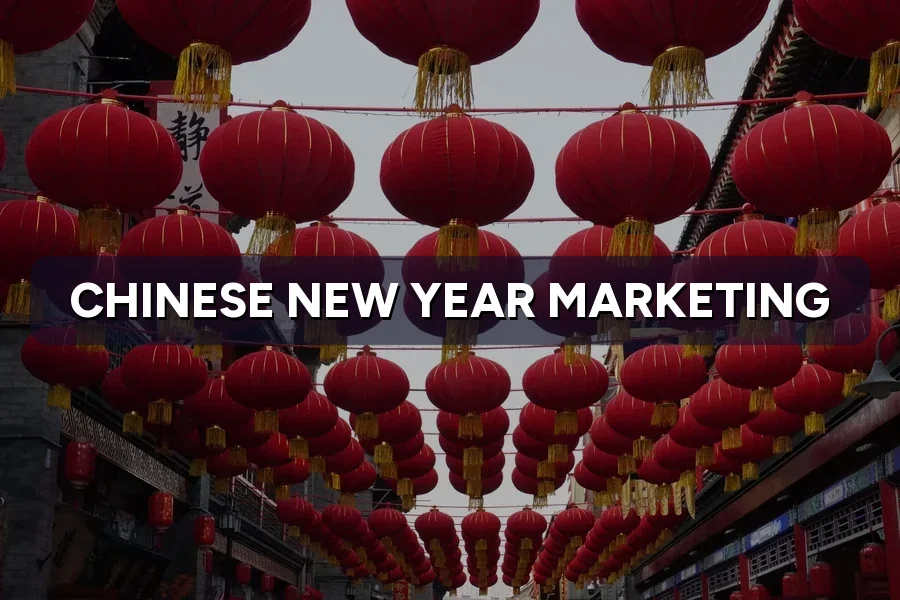
Every January, Malaysian feeds fill with the same things: red lanterns, gold coins, a cartoon zodiac animal and “Gong Xi Fa Cai, 15% off”. Most of these posts arrive in the final ten days, when ad costs peak and buyers have already chosen where to order their yee sang and hampers. Chinese New Year marketing in Malaysia pays off when it starts earlier and is planned like a season.
This plan from IZI Digital Marketing starts with where your audience lives and how old they are. It then sets out a week-by-week timeline for CNY 2027 and shows how the date moves up to 2030. It also covers offer and creative ideas that suit Malaysian audiences, the channel mix for different businesses, and how to measure the result. It works for a Penang bakery, a Johor furniture shop or a Klang Valley B2B firm sending client hampers.
Not sure your CNY plan will be ready before December gets busy?
Tell us what you sell, when your stock lands and what last year’s festive sales looked like. We will tell you which weeks deserve the budget. Request a CNY timeline check
The film below, PETRONAS’ Chinese New Year 2025 story “Stay”, shows the tone Malaysian audiences respond to: family, sacrifice and home, with the brand almost absent. Watch how long it takes before anything resembling a product appears. The sections after it turn that tone into a campaign you can run.
“Stay”: A Malaysian Chinese New Year Brand Film
Source video: Watch on YouTube
BENCHMARK BRIEFING 1 OF 4
Where Should Your Chinese New Year Marketing Focus in Malaysia?
IN BRIEFFocus on six states. DOSM’s 2026 estimates count about 6.83 million Chinese Malaysians, and 82% of them live in Selangor, Johor, Kuala Lumpur, Penang, Perak and Sarawak. Use location targeting in your Meta ads campaigns to weight the budget towards those states.
Chinese population by state, 2026 estimates, ranked by size:
| State | Chinese population | Share of state | Share of all Chinese Malaysians |
|---|---|---|---|
| Selangor | 1,757,100 | 23.6% | 25.7% |
| Johor | 1,212,600 | 28.7% | 17.8% |
| Kuala Lumpur | 728,200 | 35.0% | 10.7% |
| Pulau Pinang | 706,300 | 39.1% | 10.3% |
| Perak | 622,300 | 24.1% | 9.1% |
| Sarawak | 557,000 | 21.9% | 8.2% |
| Kedah | 245,500 | 11.0% | 3.6% |
| Negeri Sembilan | 243,900 | 19.5% | 3.6% |
| Melaka | 202,000 | 19.1% | 3.0% |
| All other states and territories | about 554,200 | 0.5% to 12.9% | 8.1% |
Aggregated by IZI Digital Marketing from the Department of Statistics Malaysia Population Table: States on OpenDOSM (estimates for 1 January 2026), checked 5 October 2026. Figures rounded to the nearest hundred. Rust rows: the largest community and the highest share of any state.
Selangor and Johor alone hold more than 43% of your audience. That makes the Klang Valley suburbs and the Johor Bahru, Kluang and Batu Pahat belt the default home for most of the budget. Penang is the efficiency play: Chinese Malaysians make up 39.1% of the state, the highest share anywhere, so local ads there waste the least reach.
Sarawak deserves its own line. It holds more Chinese Malaysians than Kedah and Negeri Sembilan combined, mainly around Kuching, Sibu and Miri. Many peninsula brands forget it, which leaves the feed less crowded for those who don’t.
BENCHMARK BRIEFING 2 OF 4
Which Age Groups and Channels Should a CNY Campaign Reach?
IN BRIEFChinese Malaysians are noticeably older than the national average: 38.5% are aged 45 or above, against 28.3% of all Malaysians. That pulls the mix towards Facebook, WhatsApp and YouTube for household buyers, with Instagram, TikTok and Xiaohongshu for Malaysian brands covering under-35s.
Age profile of Chinese Malaysians against the whole population, 2026 estimates:
| Age group | Chinese Malaysians (rust) vs all Malaysians (slate) | Channels that usually reach them |
|---|---|---|
| 0 to 14 |
15.7% vs 21.2% |
Reached through parents and grandparents |
| 15 to 24 |
15.8% vs 16.9% |
TikTok, Xiaohongshu, Instagram Reels |
| 25 to 34 |
14.1% vs 17.5% |
Instagram, Xiaohongshu, Google Search |
| 35 to 44 |
15.9% vs 16.1% |
Facebook, Instagram, Google Search |
| 45 to 54 |
14.7% vs 11.5% |
Facebook, WhatsApp, YouTube |
| 55 to 64 |
12.1% vs 8.4% |
Facebook, WhatsApp, YouTube |
| 65 and above |
11.7% vs 8.4% |
WhatsApp, family members, walk-in |
Aggregated by IZI Digital Marketing from the Department of Statistics Malaysia Population Table: Malaysia on OpenDOSM (estimates for 1 January 2026), checked 5 October 2026. The channel column is IZI Digital Marketing’s planning guidance, not DOSM data. Bars scaled to 21.2%. Rust rows: age groups where the community is larger than the national average.
The reunion dinner is usually paid for by the 45-plus group. Parents and grandparents tend to fund the restaurant booking, the hampers, the new clothes and most of the ang pow. They are reached on Facebook and through family WhatsApp groups, where your offer gets forwarded if it is easy to share.
Younger Chinese Malaysians decide what looks good this year: the café yee sang, the outfit, the gift that gets photographed. Use them and the creators they follow for reach. Our guide to influencer marketing rates in Malaysia shows what each creator tier costs before you commit.
BENCHMARK BRIEFING 3 OF 4
When Is Chinese New Year 2027 and When Should You Start?
IN BRIEFChinese New Year 2027 falls on Saturday 6 February, with the second day on Sunday 7 February. Plan from early November 2026 and go live in mid-December. Awal Ramadan follows on 8 February, so plan the handover to your Hari Raya marketing campaign in the same brief.
A countdown plan for CNY 2027, with the share of ad spend for each phase:
| Dates | Phase and main job | Share of ad spend |
|---|---|---|
| Early Nov to 13 Dec 2026 13 to 8 weeks out |
Plan: offer, stock, packaging, creative brief, creator bookings, corporate hamper outreach, courier cut-off dates. |
0% |
| 14 Dec 2026 to 3 Jan 2027 7 to 5 weeks out |
Build audiences: story video, product teasers and early-bird pre-order lists, kept light while year-end sales inflate ad costs. |
15% |
| 4 to 17 Jan 2027 5 to 3 weeks out |
Consideration: gift guides, catalogue ads, reunion-dinner and yee sang pre-orders, creator posts. |
30% |
| 18 to 31 Jan 2027 Final 3 weeks |
Conversion peak: retargeting, click-to-WhatsApp, Search ads, delivery deadlines. Thaipusam (22 Jan) is a holiday in several states. |
40% |
| 1 to 5 Feb 2027 Last-minute week |
Same-day pickup, e-vouchers, store hours, “still available” messages. Federal Territory Day falls on 1 Feb. |
10% |
| 6 to 20 Feb 2027 CNY to Chap Goh Mei |
Greetings, open-house content, customer photos, thank-you messages. Ramadan begins around 8 Feb. |
5% |
Illustrative model by IZI Digital Marketing, October 2026, anchored to the 2027 federal and state public holiday schedule from the Prime Minister’s Department, checked 5 October 2026. Awal Ramadan is marked subject to change. Spend shares are modelled, not measured. Bars scaled to 40%. Rust row: the conversion peak.
December is the planning trap. Year-end sales push ad costs up just as your CNY build phase should start. Keep that phase lean, use it to collect video viewers and pre-order sign-ups cheaply, and save the real money for January. Our guide to seasonal SEM planning in Malaysia covers the same squeeze on the search side.
The second day of CNY 2027 falls on a Sunday and is not a holiday in every state. Check your state’s replacement day before you set opening hours or delivery promises.
DESIGN · IDEAS THAT FIT MALAYSIA
Chinese New Year Marketing Ideas for Malaysian Audiences
IN BRIEFThe best CNY ideas in Malaysia come from real rituals: the reunion dinner, lo hei with yee sang, ang pow, the drive back to Ipoh or Penang, spring cleaning and the open house. Pick one ritual your product genuinely serves. Our guide to ad creative that stops the scroll covers the craft.
- Reunion dinner and yee sang pre-orders. Restaurants, caterers and bakeries should sell slots and sets early, with a clear sold-out date. Scarcity is honest here, because kitchens really do fill up.
- Corporate hampers and mandarin oranges. B2B firms send gifts to clients and staff. Reach purchasing teams in early January, before gift lists and budgets are locked.
- Spring-cleaning and home refresh. Cleaning services, furniture, curtain and appliance shops can own the weeks before CNY, when families get the house ready for guests.
- Balik kampung checks. Many families drive north to Perak and Penang or south to Johor. Workshops, tyre shops and car-care brands can offer pre-trip inspections.
- Ang pow packets as a gift. Branded ang pow packets are a low-cost thank-you that customers actually use and display. Hand them out with purchases from mid-January.
- A short family film. As the video above shows, a story about home can travel further than a discount post. Keep the product in the final seconds.
Get the language and symbols right. Mandarin greetings such as “Gong Xi Fa Cai” work nationally, but Cantonese “Kong Hei Fatt Choy” lands better in Kuala Lumpur and Ipoh, and Hokkien phrasing in Penang. Avoid the number 4, clocks as gifts and white-heavy designs. 2027 is the Year of the Goat, so check zodiac artwork with someone who celebrates. Our Deepavali marketing ideas plan applies the same respect-first rule to another festival.
DECISION BOX · WHICH CNY CAMPAIGN AND CHANNEL MIX FITS YOUR BUSINESS?
| Your business | Campaign type and lead offer | Core channels |
|---|---|---|
| Restaurant, caterer or bakery | Pre-order campaign: reunion sets, yee sang, cookies with a cut-off date | Facebook and Instagram, click-to-WhatsApp, Google Maps and Search |
| Retail or e-commerce selling festive products | Full eight-week sales campaign: bundles, early-bird pricing, delivery deadlines | Meta catalogue ads, TikTok, Google Shopping, creators |
| Service business (cleaning, workshop, salon) | Booking push before the rush: pre-CNY slots and packages | Google Search, Facebook, WhatsApp follow-up |
| B2B firm or brand with no festive product | Goodwill campaign: client hampers, greetings, a short film; no discount | LinkedIn, email, WhatsApp to existing clients |
Verdict: Fund the channel closest to the purchase first, usually Meta plus Google Search ads, then add TikTok and creators once that core is paid for.
Small budgets should stay focused. Spreading a few thousand ringgit across five platforms starves each one of the data it needs. Our guide on splitting a Meta ads budget shows how to divide spend between prospecting and retargeting. Our breakdown of TikTok ads cost in Malaysia helps you price the extra reach.
Want a second opinion on your CNY offer and channel mix?
Send us the idea and the rough budget. We will check whether the offer fits the festival and whether the money sits where your buyers are. See how we plan festive Meta campaigns
BENCHMARK BRIEFING 4 OF 4
How Do Chinese New Year Dates Shift from 2027 to 2030?
IN BRIEFCNY moves between late January and mid-February, so the gap after Christmas changes every year. In 2028 it arrives just 32 days after Christmas; in 2029, 50 days. Re-check the date each year before you reuse last year’s Meta campaign plan for Chinese New Year marketing.
Chinese New Year dates for the next four years, with the planning gap after Christmas:
| Year and zodiac | First day of CNY | Chap Goh Mei | Days after Christmas |
|---|---|---|---|
| 2027 · Goat | Saturday 6 February | Saturday 20 February |
43 days |
| 2028 · Monkey | Wednesday 26 January | Wednesday 9 February |
32 days |
| 2029 · Rooster | Tuesday 13 February | Tuesday 27 February |
50 days |
| 2030 · Dog | Sunday 3 February | Sunday 17 February |
40 days |
Aggregated by IZI Digital Marketing from the Hong Kong Observatory Gregorian-Lunar Calendar Conversion Tables, checked 5 October 2026; day counts calculated by IZI Digital Marketing. Malaysia’s official holiday schedules for 2028 onwards are not yet published, so confirm against the Prime Minister’s Department list each year. Bars scaled to 50 days. Rust row: the shortest gap.
2028 is the year that catches brands out. With CNY on 26 January, the conversion peak starts in the first week of January, and the build phase runs straight through the December sales. Brands that brief in December that year will launch late.
2029 is the opposite. CNY’s second day lands on Valentine’s Day, which opens a combined gifting angle for florists, jewellers and restaurants. A longer gap after Christmas also gives you a cleaner January to build audiences.
DEPLOY · MEASURE WHAT MATTERS
How Do You Measure a Chinese New Year Campaign?
IN BRIEFJudge Chinese New Year marketing phase by phase: audience size in December, pre-orders and saves in early January, and sales or enquiries at the peak. Then compare cost per sale with a normal month. Our list of Meta ads metrics that actually matter explains each number.
| Phase | Primary metric | Warning sign |
|---|---|---|
| Build audiences | Video viewers, engagers and pre-order sign-ups | Cheap views from outside your target states |
| Consideration | Catalogue views, saves, add-to-cart, hamper enquiries | Clicks rising while time on page stays very short |
| Conversion peak | Purchases, paid pre-orders, WhatsApp orders, cost per sale | Chats rising but orders flat: a follow-up problem |
| CNY to Chap Goh Mei | Shares, customer photos, repeat-buyer list growth | Sales ads still running after the delivery cut-off |
Count WhatsApp orders properly. Many Malaysian festive orders close in chat, so ad dashboards under-report them. Set up WhatsApp click tracking for every ad before launch, with a different pre-filled message for each phase.
After the festival, message only customers who opted in, as Meta’s WhatsApp opt-in rules require. CNY buyers are a warm audience for Meta retargeting later in the year.
DRIVE · THE VERDICT
Should Your Business Run a Chinese New Year Campaign?
IN BRIEFYes, if your customers buy something for the festival or most of them live in the six core states. A sincere greeting is enough if you sell nothing festive. Either way, plan Chinese New Year marketing in Malaysia as part of your year, alongside the Hari Raya campaigns that follow it.
- Run a full campaign if you sell food, hampers, gifts, clothing, home goods, cleaning or car services, and many of your customers live in Selangor, Johor, Kuala Lumpur, Penang, Perak or Sarawak.
- Run a light campaign if you serve a mixed audience. A respectful greeting, one short video and a small pre-CNY booking push are enough.
- Send greetings only if your product has no festive role. Forced CNY discounts on unrelated products read as opportunistic.
FAQ
Frequently Asked Questions
1. When is Chinese New Year 2027 in Malaysia?
Chinese New Year 2027 falls on Saturday 6 February, with the second day on Sunday 7 February. It depends slightly on your state, because the second day is not observed everywhere and replacement holidays vary. Check the Prime Minister’s Department schedule before you set opening hours.
2. When should I start my Chinese New Year marketing campaign?
Start planning about 13 weeks out and go live about seven weeks before the festival. It depends on what you sell: hampers and reunion dinners need pre-orders early, while services can start four weeks out. For CNY 2027, brief in early November 2026 and launch in mid-December.
3. What are good Chinese New Year promotion ideas for small businesses?
The strongest ideas tie your product to a real ritual. It depends on your business: reunion and yee sang pre-orders for restaurants, hampers for B2B gifting, pre-CNY slots for cleaners and salons, or pre-trip checks for workshops before families drive home.
4. Can a non-Chinese business run CNY marketing in Malaysia?
Yes, and many Malaysian brands do it well. It depends on relevance and respect: celebrate honestly, ask people who celebrate to check your greetings and symbols, and only sell products that genuinely fit the season.
5. Which channels work best for CNY marketing in Malaysia?
Facebook, Instagram and Google Search usually carry the sales. It depends on your buyers’ age: older household buyers sit on Facebook, WhatsApp and YouTube, while under-35s are easier to reach on TikTok, Instagram and Xiaohongshu.
6. Should I use Mandarin, Cantonese or English in CNY ads?
Use English or Malay as your base and add Chinese greetings where they fit. It depends on the area: Mandarin works nationally, Cantonese suits Kuala Lumpur and Ipoh, and Hokkien suits Penang. Have a native speaker check every line.
Start your CNY plan while the calendar is still quiet.
Book a free IZI Blueprint consultation. We will check whether a Chinese New Year campaign fits your business, map the eight-week timeline against your stock and courier limits, and agree the channel mix and the numbers that will show it worked.