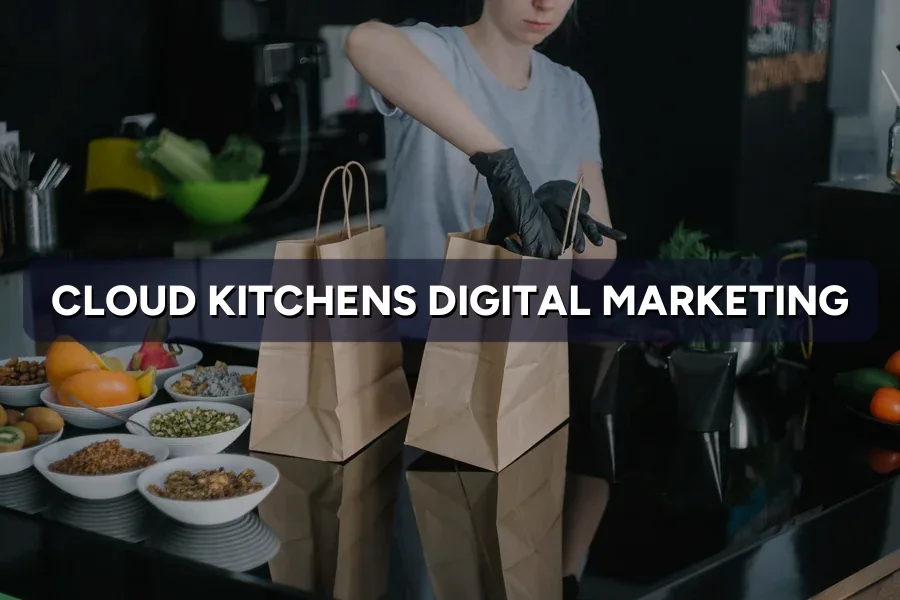
A shoplot restaurant gets something a cloud kitchen never does. People walk past it.
They see the queue on a Friday, notice the signboard on the way to the bank, and remember the smell. None of that reaches a unit on the first floor of an industrial lot in Balakong. Your entire storefront is a thumbnail in an app, sitting between forty others, and someone is deciding in about two seconds.
That is a harder starting position than most kitchen owners plan for. It also changes what marketing money is for. This guide applies the IZI Blueprint, the four-phase method we use in consulting engagements, to delivery-only kitchens: how Malaysians actually pick dinner, what one order leaves you once the platform takes its cut, where the first ringgit belongs, and the figures that tell you it is working. The video below is a useful caution before you spend anything.
What happened when the cloud kitchen boom met the maths
Source video: How Ghost Kitchens Went From $1 Trillion Hype To A Struggling Business Model
PART 2 · THE MARKET
What Malaysia’s F&B Numbers Mean for a Delivery-Only Kitchen
IN BRIEFMalaysia’s food and beverage sector is huge, thin-margined and shrinking in premises count. That combination is exactly why delivery-only kitchens exist, and why they need a tighter plan than a Malaysian restaurant with a dining room to fall back on.
Three official figures set the floor under everything that follows.
- The sector is enormous. The Department of Statistics Malaysia Economic Census 2023: Food and Beverage Services records RM99.0 billion of gross output from 136,453 establishments.
- Premises are closing, not opening. The same census counts 167,490 establishments in 2015, a decline of 2.9 per cent a year to 2022.
- Capital per kitchen is small. Fixed assets across the whole sub-sector came to RM12.6 billion, roughly RM92,000 per establishment. A kitchen is a cheap thing to open and a cheap thing to close.
PART 3 · DIAGNOSE
How Do Malaysians Actually Choose What to Order Tonight?
IN BRIEFHunger comes first, the app second, and the brand almost last. The decision is made inside a ranked list you do not control, which is the same dependency last-mile delivery operators live with from the other side.
The sequence is short, and only two steps are yours to influence.
- The craving decides the category. Nasi lemak, Korean, burger. Nobody opens the app thinking of your brand name.
- The app ranks the options. Distance, delivery fee, promo tag and rating do most of the filtering before a human looks.
- The thumbnail earns the tap. One photograph and a price. This is the only part of your storefront most buyers ever see.
- Rating and order count confirm it. Below about four stars, or with a handful of ratings, the tap goes elsewhere.
- The food decides the second order. Reordering is where a cloud kitchen makes money, because that customer costs nothing to win twice.
Do you know what share of your orders are repeat orders?
Most kitchen owners guess high. We read the platform export with you and find the real number. Meet IZI Digital Marketing
PART 4 · DIAGNOSE
Where Cloud Kitchens Leak Orders
IN BRIEFSix leaks explain most of the gap between orders you get and orders you could get, and five cost nothing to close. They are the same leaks Malaysian cafés face, minus the chance to fix it with a smile at the counter.
Order from your own kitchen tonight, on a phone nobody at work recognises, and watch for these.
- The hero photograph is a stock image. Buyers can tell. A real photograph of your own dish, shot on a plain surface in daylight, outperforms a downloaded one.
- Menu names describe the kitchen, not the craving. “Set B” wins nothing. “Ayam Gepuk with Sambal Bawang” matches what a hungry person types.
- Preparation time is set too optimistically. A late order costs a rating, and the rating costs ranking for weeks.
- No packaging insert. The bag is the only physical contact you get. Nothing inside it asks for a review or a direct reorder.
- One brand, one cuisine, no coverage. Quiet hours stay quiet because nothing in the menu suits breakfast or supper.
- Nobody replies to reviews. A one-star complaint left unanswered reads to the next buyer as an accurate warning.
PART 5 · DESIGN
Which Channel Deserves Your First Ringgit?
IN BRIEFPlatform listing work comes first because it is where the orders already are. Facebook and Instagram advertising earns second place, and only once you have a direct ordering channel worth sending people to.
Four options want the budget. Four tests separate them: how fast an order arrives, the minimum spend, how much margin survives, and whether the customer is yours afterwards.
DECISION BOX · FIRST CHANNEL FOR A CLOUD KITCHEN
| Option | Speed to first order | Monthly floor | Margin kept per order | Do you own the customer |
|---|---|---|---|---|
| Listing and menu work on the apps | Days | RM 0–300 | Low, commission still applies | No |
| In-app promos and sponsored placement | Same day | RM 300+ | Lowest, discount on top of commission | No |
| Paid social to a WhatsApp order link | 2–4 weeks | RM 600+ | Highest, no commission | Yes |
| Corporate and bulk lunch orders | 4–8 weeks | RM 200+ | High, and predictable | Yes |
Verdict: Fix the listings first, since they lift every order you already receive. Use promos only to launch a new brand or fill a dead hour, never as a standing tactic, and build the direct channel in parallel so there is somewhere profitable to send people. Google Search advertising belongs to corporate and catering demand, not to hungry individuals.
PART 6 · DESIGN
Setting a Budget From Contribution per Order
IN BRIEFBudget from what one order leaves you, never from revenue. Revenue flatters a kitchen with a heavy platform mix, the same way it flatters bars and lounges running on discounted volume.
A percentage of turnover misleads here, because commission and discounts come out before you see anything. Work through it in this order instead.
- Average basket value. Take the last full month, all channels, and divide revenue by order count.
- Food and packaging cost per order. Everything that leaves the kitchen with the bag, priced honestly.
- Commission or discount per order. Platform fees and any promo funding, by channel.
- Contribution per order. Basket minus the two above, blended across your channel mix.
- Monthly ceiling. Around 20 per cent of total monthly contribution. Below that figure, growth has to come from mix, not spend.
Bring three numbers and we will size the ceiling with you
Last month’s order count, your average basket, and the split between platform and direct. See where local search fits the same maths
PART 7 · DESIGN
Licences, Listings and the Trust You Cannot Fake
IN BRIEFA buyer who cannot see your kitchen judges it by what you publish about it. Licensing and certification carry more weight here than they do for halal caterers, who at least get a tasting to prove themselves.
Four things belong on your page and in your listing, and three of them are legal obligations anyway.
- A local council food premises licence. Every kitchen needs one from its own council. In Petaling Jaya, applications run through the MBPJ licensing department, and a health inspection is part of the process.
- Trained, vaccinated food handlers. Under the Food Hygiene Regulations 2009, made under the Food Act 1983, food handlers must complete recognised training and hold anti-typhoid vaccination.
- Halal certification, if you claim it. Claiming halal without certification is an offence, not a marketing shortcut. Apply through the Halal Malaysia Portal or say nothing.
- A photograph of the actual kitchen. Optional, and the single most persuasive asset a delivery-only brand owns. Clean stainless steel and a named chef answer the question every buyer is quietly asking.
PART 8 · DEPLOY
The First 90 Days, in Sequence
IN BRIEFTwo weeks diagnosing, two designing, then listings and a direct channel built before any paid reach. That order matters more than the tools, and it holds just as firmly for organic search work.
How to roll out digital marketing for a cloud kitchen in 90 days
Work through these in order.
- Weeks 1–2: Diagnose. Order from your own brand, export last month’s orders by hour and by channel, and calculate contribution per order honestly.
- Weeks 3–4: Design. Pick a channel from the Decision Box, set the ceiling from contribution, and decide which dead hour you are attacking first.
- Weeks 5–6: Rebuild the listings. Reshoot the top six dishes, rewrite menu names around what people search, and set prep times you can actually meet.
- Weeks 7–8: Open a direct channel. A WhatsApp catalogue or a simple order page, priced below the platform version, with a card in every bag pointing to it.
- Weeks 9–10: Harvest ratings. Reply to every review, ask satisfied repeat buyers directly, and fix whatever two complaints keep recurring.
- Weeks 11–12: Fund one paid channel. Take it to its floor, send the traffic to the direct channel, then use the Part 10 figures to scale, hold or stop.
PART 9 · DEPLOY
Google Business Profile When You Have No Dining Room
IN BRIEFA delivery-only kitchen can hold a listing, but the rules are narrower than for a shopfront. Get this right and it feeds your wider local search visibility for free.
Read Google’s business eligibility and ownership guidelines before you create anything, because a rejected or suspended listing is slow to recover.
- One real operating address, not a mailbox. A rented address you do not cook from is not eligible, and Google says so plainly.
- Hide the address, set a service area. If customers never come to you, that is the correct configuration rather than a workaround.
- Do not clone a listing per virtual brand. Multiple profiles at one kitchen address is the fastest route to suspension across all of them.
- Use the ordering and menu links. Point them at your direct channel, since this is one of the few free places you outrank the apps.
- Post the kitchen, not the packaging. Weekly photographs of food being made do more for a faceless brand than product shots.
- Reply to every review within a day. The reply is read by the next buyer far more often than by the complainant.
BENCHMARK BRIEFING 1 OF 4
Where Does Every RM100 of Malaysian F&B Revenue Go?
IN BRIEFMalaysia’s official F&B census, read as a margin statement rather than an economics report. The last row is the one that decides your budget, which is the evidence-first footing we bring to every industry we advise.
| Line item, 2022 | RM billion | Per RM100 of output | What it means for a cloud kitchen |
|---|---|---|---|
| Gross output | 99.0 | RM100.00 | What the customer pays, before anyone is paid |
| Intermediate input | 55.1 | RM55.70 | Ingredients, packaging, utilities, gone before you start |
| Value added | 43.8 | RM44.20 | Everything the business itself has to live on |
| Salaries and wages | 15.5 | RM15.70 | Your cooks and riders, paid whether orders come or not |
| Left for rent, commission, marketing and profit | 28.3 | RM28.60 | A platform commission is taken out of this line |
Aggregated by IZI Digital Marketing from the Department of Statistics Malaysia Economic Census 2023: Food and Beverage Services. The cloud kitchen column is IZI’s own reading. Licence.
Commission comes out of RM28.60, not out of the RM100 on the invoice. That is why a discount funded on top of commission costs far more than it feels like it does.
BENCHMARK BRIEFING 2 OF 4
What Does a RM30 Delivery Order Actually Leave You?
IN BRIEFA modelled RM30 basket, carried through the census cost structure and then through four commission scenarios. The gap between the top bar and the bottom one is the whole argument, and it is one catering companies never have to settle.
| Channel on a RM30 order | Contribution against a direct order | You keep |
|---|---|---|
| Direct order, no commission | RM8.60 | |
| Platform at 20 per cent | RM2.60 | |
| Platform at 25 per cent | RM1.10 | |
| Platform at 30 per cent | Nil |
Illustrative model by IZI Digital Marketing, built on the DOSM F&B cost structure and stated commission scenarios. Not measured results. Licence.
Kitchens survive the bottom rows by pricing higher on-platform, which is sensible and rarely done deliberately. Set that price from this table rather than from what the neighbouring listing charges.
BENCHMARK BRIEFING 3 OF 4
How Many Orders a Day Before Marketing Pays for Itself?
IN BRIEFA modelled ladder at RM30 a basket and a blended RM4.10 contribution. Read the last column before committing to any paid social budget, because it is smaller than most proposals assume.
| Orders a day | Orders a month | Monthly revenue | Monthly contribution | Marketing ceiling |
|---|---|---|---|---|
| 20 orders | 600 | RM18,000 | RM2,460 | RM490 |
| 40 orders | 1,200 | RM36,000 | RM4,920 | RM980 |
| 60 orders | 1,800 | RM54,000 | RM7,380 | RM1,480 |
| 80 orders | 2,400 | RM72,000 | RM9,840 | RM1,970 |
| 120 orders | 3,600 | RM108,000 | RM14,760 | RM2,950 |
Illustrative model by IZI Digital Marketing, built on a RM30 basket, a 60:40 platform-to-direct mix and a ceiling at twenty per cent of contribution. Not measured results. Licence.
At twenty orders a day the ceiling is under RM500, which buys almost nothing. Kitchens at that level grow by changing the mix and the menu, not by finding a budget they do not have.
Your order export tells a sharper story than this model
Send us last month’s orders by hour and channel and we will rebuild the ladder on your real basket. See how that becomes a content plan
BENCHMARK BRIEFING 4 OF 4
Is Malaysia’s F&B Market Getting More or Less Crowded?
IN BRIEFPremises are disappearing at about 2.9 per cent a year on the measured trend. Fewer shopfronts does not mean less competition, a distinction that also catches out Malaysian GP clinics reading their own sector counts.
| Year | F&B establishments | Change from 2022 | Basis |
|---|---|---|---|
| 2015 | 167,490 | +22.7% | DOSM measured |
| 2022 | 136,453 | Base year | DOSM measured, down 2.9% a year |
| 2026, projected | 121,300 | −11.1% | Modelled at 2.9% a year |
| 2028, projected | 114,400 | −16.2% | Modelled at 2.9% a year |
Modelled by IZI Digital Marketing on the DOSM F&B establishment counts. Shaded rows are projections, not measured results. Licence.
Treat the shaded rows as direction, not forecast. A census counts premises, so four delivery brands sharing one unit may register as one. The shoplot is thinning while the app fills up.
PART 10 · DRIVE
The Numbers That Tell You It’s Working
IN BRIEFFive figures, read on the same date each month, tell you whether cloud kitchen advertising pays for itself. Direct-order share leads them all, and this is the review cadence we run with clients in every sector.
| KPI | Where to read it | Change-of-course trigger |
|---|---|---|
| Share of orders taken direct | Own channel orders over total | Flat for three months |
| Contribution per order, blended | Monthly contribution over orders | Falling two months running |
| Repeat-order rate | Platform and WhatsApp customer records | Below one order in four |
| Average rating and late-order rate | Platform merchant dashboard | Rating under 4.5 or lateness over 5% |
| Orders in your quietest four hours | Order export, by hour | No movement after a full campaign |
Order volume flatters a kitchen that is buying growth. If orders climb while contribution per order falls, you are working harder to hand more of the basket to someone else.
FAQ
Common Questions About Cloud Kitchen Marketing in Malaysia
1. How much should a Malaysian cloud kitchen spend on marketing each month?
Most single-unit kitchens land between RM500 and RM3,000 a month. It depends on contribution rather than revenue, since a heavy platform mix leaves far less to spend. Size it at roughly 20 per cent of your total monthly contribution, not a percentage of turnover.
2. Do I need a licence to run a cloud kitchen in Malaysia?
Yes, the same food premises licence any kitchen needs from its local council. It depends on the council, but the health inspection and the food handler requirements under the Food Hygiene Regulations 2009 apply regardless of whether customers ever visit you.
3. Is it better to sell on the delivery apps or take orders direct?
Both, deliberately, with different prices. It depends on your volume, though the apps supply discovery you cannot buy elsewhere while direct orders supply the margin. Treat platform orders as paid customer acquisition and move the repeat buyers across.
4. Can a cloud kitchen have a Google Business Profile?
Yes, if you genuinely operate from the address. It depends on the setup: hide the address and set a service area, since customers do not visit. Do not create a separate listing for each virtual brand at one kitchen, as that risks suspension.
5. How many virtual brands should one kitchen run?
Start with one and add a second only when the first is profitable. It depends on menu overlap, because brands sharing ingredients and equipment cost little to add. Three unrelated cuisines from one line usually damages prep times and ratings across all of them.
THE VERDICT
Your Decision Checklist
Four decisions about digital marketing for cloud kitchens should now be yours to make.
- Which channel opens the account. Listing and menu work first, because it lifts every order you already receive before any money moves.
- What your monthly ceiling is. A figure produced by contribution per order and channel mix, not a package tier from a proposal.
- What the spend is actually buying. Either a dead hour with a named dish attached, or a shift towards direct orders. Not both at once.
- The evidence that would stop you. Agreed in advance, with contribution per order ranked above order volume.
One caveat worth saying plainly: if your prep times are slipping or your rating sits below four and a half, hold off on hiring anyone. Paid reach into a kitchen that delivers late simply buys you worse reviews faster.
Not sure which of the four to decide first?
Take a free Blueprint consultation. We will read your order export with you, put a number on the ceiling, and hand over a 90-day sequence you are free to run with anyone.