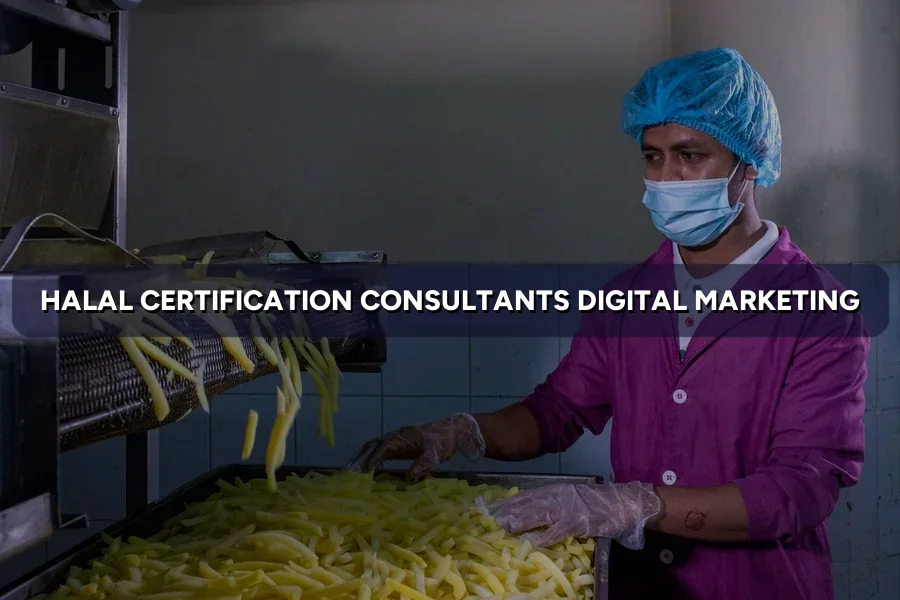
A Rawang sauce manufacturer is told by a Middle East distributor that the order needs a Malaysian halal certificate. A Puchong bakery expanding into a shopping mall discovers the tenancy requires one. A cosmetics brand that has held certification since 2021 gets a renewal reminder and realises nobody in the company remembers how it was done.
None of the three searched for a consultant. All three searched for the certificate.
If you run a halal certification consultancy in Malaysia, this guide applies the IZI Blueprint — the four-phase method we use in consulting engagements — to that gap. It starts with an uncomfortable fact about your position. No statutory register carries your name, and your buyer cannot tell you apart from the department that issues the certificate.
Before the decisions, it helps to see how the certification process gets explained to the person about to hire you.
What your prospect is told the certification process involves
Source video: How Can a Business Get Halal Certification? Step-by-Step Halal Guide for Companies, published by Halal Talk Show
PART 2 · THE MARKET
What the Halal Consulting Market in Malaysia Looks Like in 2026
IN BRIEFGrowing fast, and almost entirely invisible online. Malaysian halal exports reached RM68.52 billion in 2025, yet the consultancies helping firms qualify are hard to tell apart — a gap a structured search programme closes better than any advertising budget.
Four market facts shape every decision that follows.
- The export number keeps climbing. Halal exports hit RM68.52 billion in 2025, up 10.9%, according to the Halal Development Corporation.
- Certification is the bottleneck, not demand. MITI has said Malaysia’s ability to dominate the halal market is constrained by the low issuance of halal certificates.
- Nobody licenses you. There is no statutory register of halal consultants. The credential that carries weight is training recognised by JAKIM’s Halal Professional Board, and buyers rarely know to ask.
- The whole process moved online. Applications have gone through the MYeHALAL portal since 5 May 2025, which changed what clients need help with.
PART 3 · DIAGNOSE
How Malaysian Companies Decide They Need a Halal Consultant
IN BRIEFSomebody else decides for them, usually with a date attached. That makes this journey far closer to how a factory goes looking for an ISO consultant than to a considered professional appointment.
Four steps, often compressed into three weeks.
- An outside party creates the requirement. A distributor, a mall landlord, a supermarket buyer, an export customer. The decision was made in someone else’s building.
- They search the certificate, not the service. “How to apply halal certification Malaysia”, “berapa kos sijil halal”. Your firm’s name appears in none of those queries.
- They confuse you with JAKIM. Applicant, consultant, auditor, certifying authority — four roles that look like one from outside.
- They collect quotes and compare the only number they understand. Usually within days, usually on price alone.
Losing work to firms whose method you doubt?
That is usually a visibility problem wearing a pricing costume. Meet IZI Digital Marketing
PART 4 · DIAGNOSE
Where Halal Consultants Lose Enquiries
IN BRIEFFive leaks, and writing for the wrong size of company causes the most damage. A café owner and a multinational’s quality manager need different proof at different lengths, and flattening the two costs enquiries the way it does for restaurants chasing mixed markets.
Open your site on a phone and read it as a production manager who was given a deadline yesterday.
- Written for one size of client. A premise wants a fee and a date; a multinational wants your document control approach. Serve both and you convince neither.
- Silence on money. Not the final fee, but its shape: what drives it up, what a single-product SME pays, what lab testing adds.
- No word on who issues the certificate. Say early that JAKIM or the state authority decides. Buyers promised a guarantee elsewhere will notice.
- Anonymous consultants. No names, no Halal Professional Board training, no sectors worked. You are selling a person’s judgment.
- Slow replies to a dated requirement. A shipment does not wait because your enquiry form goes to an inbox nobody owns.
PART 5 · DESIGN
Which Channel Deserves Your First Ringgit?
IN BRIEFWhichever one reaches somebody already holding a deadline. Nobody browses their way into certification, so written answers to cost and timeline questions plus search advertising on certification terms beat every interruption channel available to you.
Four criteria settle it: how fast a first enquiry arrives, the monthly floor, whether the channel reaches someone with an existing requirement, and how much of your own week it consumes.
DECISION BOX · FIRST CHANNEL FOR A HALAL CONSULTANCY
| Option | Speed to an enquiry | Monthly floor | Reaches someone who is | Your time |
|---|---|---|---|---|
| Pages built around cost, timeline and company size | 3–5 months | RM 0–800 | Scoping the job quietly | High once, then low |
| Search ads on certification terms | Days | RM 1,500+ | Working to a customer’s date | Low once built properly |
| Trade events and association work | One to two quarters | Time, not ringgit | Not yet under pressure | High and personal |
| Business Profile and state coverage | 4–8 weeks | RM 0–300 | Looking for a nearby firm | Low, but never finished |
Verdict: Answer the cost and timeline questions in writing first, because every other channel converts badly without those answers. Add search ads if your clients arrive with export deadlines, or build association and map listing visibility if you can wait a quarter.
The classic waste is bidding on “halal” alone. Most of that traffic wants restaurant recommendations, ingredient rulings or the logo file.
PART 6 · DESIGN
Setting a Budget Around a Two-Year Certificate Cycle
IN BRIEFBudget against the renewal cycle, never the first application fee. JAKIM’s certification fee runs for two years, so every client is a scheduled return — the same retained-client maths law firms use when they price a relationship rather than a file.
Five numbers, worked one client type at a time.
- Pick one client type. Single-outlet food premise, SME manufacturer, or multi-site group. Never an average of all three.
- Count the full cycle. First application, added products, the two-year renewal, the second scheme the same client eventually needs.
- Deduct the real cost to serve. Site visits, document rework, supplier chasing, and applications that stall when the client stops replying.
- Set an affordable cost per engagement. Take the share of margin you will spend, then divide by that client type’s enquiry-to-project rate.
- Cap spending at consultant days. Capacity, not revenue, is the ceiling when two people carry all the knowledge.
Never split your client list by company size before?
It takes an afternoon and usually redirects a year of spending. See the sectors we run this exercise for
PART 7 · DESIGN
Website and Proof: Publish the Rule, Not the Reassurance
IN BRIEFA buyer cannot verify a promise, but they can verify a government document. Reproducing the actual requirement beats describing your integrity in your own words, which is the same proof problem unlicensed advisory work like will writing faces.
Every consultancy site in this market says it is thorough, experienced and trustworthy. None of that is checkable. What is checkable sits on government websites, and almost nobody reproduces it.
- Quote the rule, link the source. Imported goods may not be described as halal unless certified by a foreign body JAKIM recognises, under the Trade Descriptions Order 2011. One paragraph answers a question your buyer was too embarrassed to ask.
- Name your credentials precisely. Halal Professional Board recognised training, the schemes each consultant covers, the sectors they have worked in.
- Show the documents, not the promise. A sample checklist teaches more about your method than three paragraphs about your values.
- State who decides, early. You prepare the company; JAKIM or the state authority decides. Saying it first separates you from anyone implying a guarantee.
- One action per page. Usually a scoping call, because nothing here can be quoted honestly from a form.
PART 8 · DEPLOY
The First 90 Days, in Sequence
IN BRIEFDiagnose for a fortnight, design for a fortnight, publish everything free before buying anything. It is the order we use across every sector we advise, and reversing it is the most expensive mistake on offer here.
How to roll out digital marketing for halal certification consultants in 90 days
Six steps. The order matters more than the pace.
- Weeks 1–2: Diagnose. Run the five-point leak audit on a phone, then sort last year’s projects by company size, fee and how each client found you.
- Weeks 3–4: Design. Pick one client size and one channel, set the ceiling from your per-type maths, and name who replies within four working hours.
- Weeks 5–6: Answer the money questions. Publish what drives cost up, what a single-product applicant pays, what lab testing adds and what the renewal costs.
- Weeks 7–8: Write the urgency pages. Certification demanded by a fixed date, application rejected, certificate expiring, MYeHALAL submission stuck.
- Weeks 9–10: Claim the Business Profile and visit two referrers. Fill the listing out properly, then take a capability note to a packaging supplier and a trade association.
- Weeks 11–12: Deploy one paid channel properly. Run it three months without tinkering, then read the Part 10 numbers.
PART 9 · DEPLOY
Local Visibility: Google Business Profile and Reviews
IN BRIEFFree, badly neglected in this profession, and the first thing a cautious buyer checks. It is the same review discipline that decides which clinic a patient calls, applied to a decision worth far more per client.
Google’s guidance on improving local ranking confirms that advertising does not lift a map position, so the listing rewards upkeep rather than spending.
- Use the words your buyer types. “Halal certification for food manufacturing” beats “halal consultancy”, which matches almost nothing anyone searches.
- Post rule changes, not promotions. A short note when a procedure or portal requirement changes earns more attention than any designed graphic.
- Ask when the certificate is issued. That is the one moment of visible relief in a process the client experienced as paperwork.
- Never name a client’s non-conformities. Thank the reviewer briefly and take every detail private, including with unhappy ones.
- Answer in the language of the review. Half this market runs in Malay and half in English, and replying in the wrong one reads as a template.
BENCHMARK BRIEFING 1 OF 4
How Does JAKIM Actually Price Halal Certification?
IN BRIEFBy company size, not by product type, and with three separate cost events. That is the axis your buyer is comparing quotes on, so a search programme for a halal consultancy should follow it rather than your service menu.
| Category | Bands | Sub-categories and conditions |
|---|---|---|
| Industry, factory and product | 3 | Small industry, small and medium industry, multinational |
| Food premise | 2 | Restaurant, hotel |
| Slaughterhouse | 3 | Small sized, medium sized, large sized |
| Fee validity | — | Two years; payment falls due again at renewal |
| Laboratory testing | — | Borne fully by the applicant; government or approved private labs only |
| Added products | — | A further fee applies after the certificate has been issued |
Aggregated by IZI Digital Marketing from the Halal Malaysia Portal certification page; rates are preset by category and subject to change. Licence.
A small industry applicant and a multinational sit in different bands before anyone discusses scope. Sort your pages by that split and the quote comparison stops being a coin toss.
BENCHMARK BRIEFING 2 OF 4
Who Actually Holds Malaysia’s Halal Certificates?
IN BRIEFMostly non-Muslim-owned companies, by a wide and stable margin. That reshapes who your pages should address and in what language, much as it does for caterers serving mixed markets.
| Period | Products certified | Non-bumiputera owned | Bumiputera owned | Non-bumiputera share |
|---|---|---|---|---|
| FULL YEARS | ||||
| 2021 | 95,398 | 68,686 | 26,712 | 72.0% |
| 2022 | 104,017 | 74,892 | 29,125 | 72.0% |
| PART-YEAR AND HEADLINE FIGURES | ||||
| 1 January to 10 April 2023 | 29,789 | 21,448 | 8,341 | 72.0% |
| Certified products, 2021 to 10 April 2023 | 229,204 | 165,026 | — | almost 72% |
| Companies holding a certificate, 31 December 2022 | 7,742 | — | — | 59% |
Compiled by IZI Digital Marketing from JAKIM figures reported by Sinar Daily; shares are our calculation from the published counts. Licence.
That share barely moves across three periods. Your likeliest prospect is a non-Muslim-owned SME treating certification as market access, who needs the process explained without assumed knowledge.
Writing for exporters and local food premises at once?
They arrive on different terms, need different proof, and should never share a landing page. Compare how each group is written for
BENCHMARK BRIEFING 3 OF 4
What Is One Halal Client Worth Across a Full Certificate Cycle?
IN BRIEFTwo to three times the first fee, once the renewal and added products land. Costing digital marketing for halal certification consultants against that full figure, instead of the first invoice, changes what you can afford on paid search.
| Applicant type | Total cycle value | First fee | Follow-on work | Cycle total | Affordable to win |
|---|---|---|---|---|---|
| Single-outlet food premise | RM 3,000 | RM 1,800 | RM 4,800 | RM 960 | |
| Small industry manufacturer | RM 7,500 | RM 5,200 | RM 12,700 | RM 2,540 | |
| Medium industry, multi-product | RM 14,000 | RM 11,500 | RM 25,500 | RM 5,100 | |
| Multinational or multi-site group | RM 24,000 | RM 20,000 | RM 44,000 | RM 8,800 |
Illustrative model by IZI Digital Marketing, built on the two-year fee validity published by the Halal Malaysia Portal and a 20% spend share of cycle value. Not measured results. Licence.
The follow-on column is the one most consultancies never bill for. Win it and the premise client you dismissed as small becomes affordable to advertise for.
BENCHMARK BRIEFING 4 OF 4
Which Part of Malaysia’s Halal Economy Should You Chase?
IN BRIEFIngredients and palm oil, not the finished food everyone writes about. Nearly a third of export value sits in components that go inside somebody else’s certified product, and a written content plan aimed there meets almost no competition.
| Segment or market | 2025 value | Share | What it means for a consultancy |
|---|---|---|---|
| BY PRODUCT SEGMENT | |||
| Food and beverages | RM 36.86 bn | 53.8% | The crowded segment; everyone writes for it |
| Halal ingredients | RM 21.39 bn | 31.2% | Supply-chain clients whose buyers demand certification |
| Palm oil and derivatives | RM 4.57 bn | +55% growth | The fastest-moving line in the whole table |
| BY DESTINATION MARKET | |||
| China | RM 9.00 bn | 13.2% | Not a Muslim-majority market, and still the largest |
| Singapore | RM 7.11 bn | 10.4% | Short supply chains, fast-moving SME exporters |
| United States and Japan | RM 8.68 bn | 12.7% | Buyer-driven audits, documentation-heavy work |
| Indonesia | RM 3.51 bn | 5.1% | Its own certification regime sits on top |
| All halal exports, 2025 | RM 68.52 bn | 4.3% of exports | A small slice of trade, growing faster than most |
| 2030 — projection, not a recorded figure | RM 231 bn | 10.8% of GDP | MITI projection for the whole halal industry |
Compiled by IZI Digital Marketing from HDC figures for 2025 and the MITI 2030 projection; the United States and Japan row combines two reported figures. Licence.
China leads the destination list, which tells you certification is being bought as a supply-chain credential, not as a religious one. Write for the quality manager, not the marketing department.
PART 10 · DRIVE
The Numbers That Tell You It’s Working
IN BRIEFFive numbers, read monthly, and renewal share matters most. Raw enquiry volume flatters a campaign pulling in price-only shoppers, which is why the certification practices we advise are judged on the second engagement rather than the first.
Review these on the same day each month, with last month beside them.
- Engaged share of enquiries. The percentage that become a signed project. Under a fifth means your pages attract people who only wanted a price.
- Cost per engagement, by channel. Spend divided by projects signed. Counting every enquiry hides which channel eats consultant hours.
- First reply time, in working hours. A shipment does not care that the message arrived on Saturday.
- Renewal and second-scheme share. Clients renewing or adding a scheme. One retained client beats any campaign.
- Enquiries by client size. It tells you which page to write next, and which to stop funding.
FAQ
Common Questions About Digital Marketing for Halal Consultants
1. Do halal consultants in Malaysia need a licence?
No statutory licence exists for consultants. What proves competence depends on the schemes you work in, since training recognised by JAKIM’s Halal Professional Board is the credential buyers can actually check. Publish yours prominently, because very few competing sites do.
2. Can a halal consultant guarantee certification?
No, and saying so openly wins work. The exact boundary depends on the scheme, since JAKIM or the state religious authority audits and decides independently of whoever prepared the application. Anyone promising a guaranteed certificate is describing something outside their control.
3. How much should a halal consultancy spend on marketing each month?
Work it out from one client’s full cycle value, not from a fixed figure. It depends on consultant days more than revenue, because applications you cannot staff properly cost you the client and the renewal behind them. Count spare capacity before setting the budget.
4. Is SEO or Google Ads better for a halal consultancy?
Ads for deadline-driven enquiries, organic pages for the long build. It depends on your runway, though the cost and timeline answers must be published either way, because paid clicks pointed at a general services page waste most of the spend.
5. Has MYeHALAL going fully digital changed what clients need?
Yes — the help moved upstream, from form-filling to readiness. Since applications went fully online in May 2025, clients struggle less with submission and more with documents, suppliers and internal systems. Write about that instead.
THE VERDICT
Your Decision Checklist
You should now be able to make four decisions.
- Which size of client you are for. A premise operator and a multi-site manufacturer buy differently, and your site should pick a side rather than hedge.
- What your pages must produce. One scoping call, from a page stating scope, timeline, cost drivers and who actually issues the certificate.
- Where your first ringgit goes. The cost and timeline answers first, then ads if your clients arrive with export deadlines, or association and listing work if you can wait a quarter.
- What would make you change course. Agreed before you spend, and read against projects signed rather than enquiries received.
One caveat. If your consultants are already booked through the next quarter, your constraint is capacity, not visibility, and more marketing will only make delivery worse.
Not sure whether your practice needs more enquiries or better ones?
A free Blueprint consultation settles it in one session. We split your client list by applicant type and company size, set a ceiling your consultants can deliver against, and hand over a ninety-day sequence you own outright.