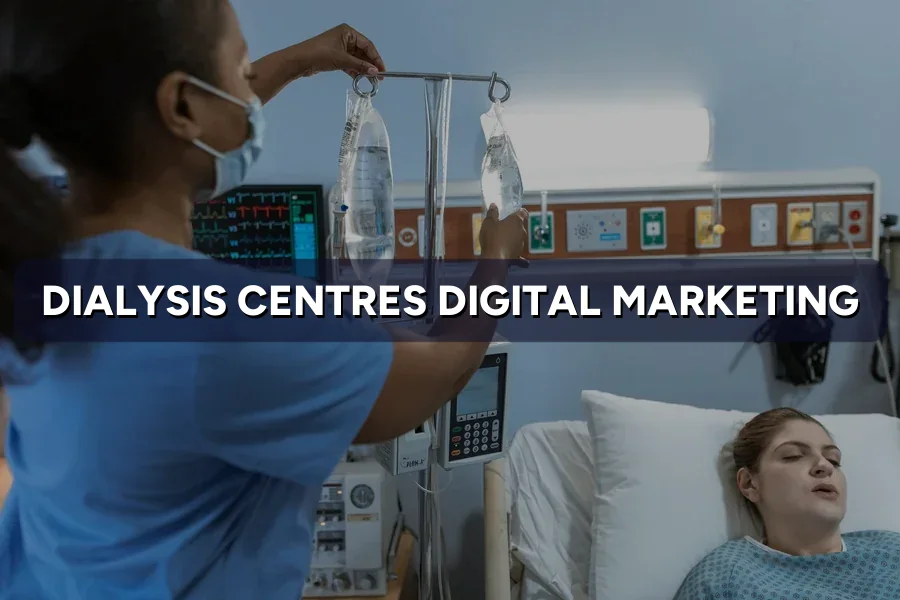
Your patient did not choose to need you, and in most cases they are not the one paying.
Government funding, SOCSO and Zakat together cover about 88 per cent of Malaysians on dialysis, and self-payers are 8.3 per cent. Yet most private centres market as though a price list and a phone number were enough, then wonder why the enquiries that arrive are the ones haggling hardest.
This guide applies the IZI Blueprint, the four-phase method IZI Digital Marketing uses in consulting engagements, to dialysis centres in Malaysia. It covers who really decides, what the licence and advertising rules allow you to say, and how to size a budget against an empty chair rather than against turnover. The video below is the conversation your prospective patient is having with their doctor right now.
Why nephrologists recommend dialysis, and what patients fear about it
Source video: You Sihat Podcast — Sakit Buah Pinggang Mesti Dialisis? ft Dr Uvanesan
PART 2 · THE MARKET
How Big Is the Dialysis Market in Malaysia?
IN BRIEFLarge, growing, and getting more crowded faster than it is growing. That combination makes local search visibility less a growth tactic than a defensive one, because a new centre opened near yours this year.
Three figures from the 32nd Report of the Malaysian Dialysis and Transplant Registry set the floor under this guide.
- 55,237 Malaysians were on dialysis at the end of 2024, up from 37,968 a decade earlier.
- 1,119 dialysis centres now operate nationwide, of which 712 are private. Private centres have grown from 435 in 2015.
- Private centres took 62 per cent of new patients in 2024, ahead of government centres at 27 per cent and NGO centres at 12 per cent.
Regulators have noticed. Health deputy director-general Dr Nor Azimi Yunus said Malaysia can no longer afford to keep building new dialysis centres, by the ministry, the private sector or NGOs.
PART 3 · DIAGNOSE
How Do Malaysian Patients Choose a Dialysis Centre?
IN BRIEFUnder pressure, in about two weeks, and usually by an adult child rather than the patient. It is a compressed version of the shortlist a family builds for a private hospital admission, with one difference: the choice is permanent.
The sequence repeats often enough to design against.
- A nephrologist sets the deadline. Dialysis starts within weeks. Nobody has time to research properly.
- The family searches, not the patient. Usually a working daughter or son, on a phone, in the evening, using the district name.
- Distance filters the list first. At three sessions a week for life, twenty minutes versus forty changes everything.
- Funding decides what survives. Do you accept SOCSO? Will you help with the Zakat or subsidy paperwork? Silence here removes you.
- A visit, then a WhatsApp message. They come to see the chairs and the nurses, then message to confirm a shift.
Step four is where most private centres quietly lose. The information exists inside the centre, and almost never on the website.
PART 4 · DIAGNOSE
Where Dialysis Centres Lose Patients Before the First Visit
IN BRIEFFive leaks, and four cost nothing but an afternoon. Run this audit before funding any traffic, exactly as you would before opening a health screening centre to walk-ins.
Open your own site on a phone, at ten at night, as a daughter whose father starts dialysis in nine days.
- No funding page. SOCSO, Zakat, the ministry subsidy, insurance panels. If she cannot see which you accept, she assumes none.
- Shift times hidden. Which shifts run, and which have vacancies. A night slot can be the difference between her father keeping his job and losing it.
- No named nephrologist or matron. Who supervises the unit, and how many nurses per shift? The whole trust question, unanswered.
- No photographs of the unit. Stock images of smiling models are worse than nothing. She wants your chairs, your machines, your corridor.
- A contact form instead of WhatsApp. She is messaging four centres tonight. The one that replies before she sleeps gets the visit.
Would your site survive that ten-o’clock test?
Send us your URL and last quarter’s admissions, and we will name the leak costing you the most chairs. See how district searches get found
PART 5 · DESIGN
Which Channel Deserves Your First Ringgit?
IN BRIEFLocal search first, nephrologist referral second, paid social last. The map listing wins because the family searches by district under time pressure, and because you can claim it this week without asking anyone’s permission.
Dialysis is an unusual category: urgent, permanent, and geographically tiny. Judge the four realistic options on speed, monthly floor, and fit for a family choosing under a deadline.
DECISION BOX · WHERE THE FIRST BUDGET GOES
| Option | Speed to first admission | Monthly cost floor | Fit for a family on a deadline |
|---|---|---|---|
| Local SEO and map listing | Medium, 2–4 months | RM 1,800+ | Strongest, she searches by district |
| Nephrologist and hospital referral | Slow, 4–9 months | Time, not media spend | Highest trust, lowest volume control |
| Google Search ads | Fast, 2–4 weeks | RM 2,000+ | Good, but a thin district search pool |
| Meta ads to adult children and carers | Fast, 2–3 weeks | RM 1,500+ | Weak on timing, strong on reassurance |
Verdict: Claim and complete the listing this month, then build the funding and shift-times pages, because every other channel lands on them. Add Google Search only if your district carries the volume, and open referral conversations in parallel since they take two quarters to mature. Keep Meta ads for reassurance content once the pages convert.
PART 6 · DESIGN
Setting a Budget From One Empty Chair, Not From Turnover
IN BRIEFA dialysis patient stays for years, so the maths looks nothing like a GP clinic visit. Count the multi-year value of one filled chair slot, then decide what an admission is worth paying for.
Four figures from your own records decide the budget, and the session fee is only the first.
- Sessions per patient per year. Three a week is roughly 156, which is your real unit of revenue.
- Average retention. How long does a patient stay with you before transplant, transfer or death? Two to three years is common.
- Chair utilisation by shift. The morning shift is usually full and the night shift usually is not. Marketing buys back the empty shift.
- Ancillary revenue. Iron and erythropoietin, access procedures, consultations. This is often a third of what a patient is worth.
At a subsidised RM 200 per session, 156 sessions a year and two years of retention, one admission is worth over RM 60,000 before ancillaries. Against that, arguing over a RM 300 cost per enquiry is the wrong argument.
PART 7 · DESIGN
The Licence and Proof That Have to Be on the Page
IN BRIEFTwo regimes apply, and confusing them is how good campaigns get pulled. One licenses the centre; the other approves every word you publish about it. Both belong on your trust pages, not in a footer.
Get the regulatory ground straight before any advertisement goes live.
- The facility licence. A private haemodialysis centre is an ambulatory care centre under the Private Healthcare Facilities and Services Act 1998, and needs the Director General of Health’s approval to establish and a licence to operate.
- The advertising approval. Advertisements relating to medical skill or service require Medicine Advertisements Board approval under the Medicines (Advertisement and Sale) Act 1956, with the number displayed.
- Name the nephrologist in charge. Registration and speciality, in plain text. The highest-value sentence on your site, and it needs no approval.
- Publish the nurse-to-patient ratio and machine count. Checkable, and almost nobody does it. Facts are also the easiest thing to get approved.
- Say which funding routes you handle, and who at your centre helps families with the forms.
Bring three numbers and we will size the spend with you
Night-shift utilisation, average retention in months, and admissions last quarter. See how the same maths shapes a content plan
PART 8 · DEPLOY
The First 90 Days, in Sequence
IN BRIEFNinety days is enough to sequence digital marketing for dialysis centres properly, with the funding page live and approvals filed before any ringgit reaches a channel. Sequence beats effort, here as in long-stay care generally.
- Weeks 1–2: Diagnose. List last year’s admissions by source, funding route, shift and length of stay.
- Weeks 3–4: Build the funding page. One page naming every route you accept and who helps with the paperwork.
- Weeks 5–6: File the advertising approvals. Submit campaign copy to the Medicine Advertisements Board while the rest continues.
- Weeks 7–8: Photograph the unit. Real chairs, machines and nurses, plus the shift timetable and vacancy status.
- Weeks 9–10: Fix reply speed. WhatsApp on every page, and a reply window you can honour into the evening.
- Weeks 11–12: Fund one channel. Take local search to its monthly floor behind the new pages, then read the numbers.
PART 9 · DEPLOY
Google Business Profile and Reviews for a Dialysis Centre
IN BRIEFDo this in-house, because it is the trust layer and nobody outside your unit can write it honestly. It is also the cheapest part of local visibility and the part most centres leave half-finished.
Four decisions matter more than the rest.
- Hours must be shift hours. If you run a night shift, say so. Most listings show clinic hours and lose the night enquiry.
- Photographs of the unit, updated quarterly. Machines, chairs, waiting area, parking. Families judge cleanliness from these before visiting.
- Ask carers, not patients, for reviews. The daughter who arranged everything writes the review that persuades the next daughter.
- Reply to every review within a week. Never confirm anyone is a patient. Thank them generally, and take specifics private.
Velocity matters more than the total. A centre gaining two reviews a month outranks one that collected thirty in 2022 and none since.
BENCHMARK BRIEFING 1 OF 4
Who Actually Pays for Dialysis in Malaysia?
IN BRIEFNot the patient, in more than nine cases out of ten. Government funding, SOCSO and Zakat carry 88 per cent between them, which means your website’s most valuable page is an administrative one.
| Who pays | Share of patients | What it means for your website |
|---|---|---|
| Government funded | 50.4% | State whether you hold a ministry subsidy allocation |
| SOCSO | 26.2% | Your single highest-value page, and usually missing |
| Zakat or Baitulmal | 11.4% | Name the state body and who helps with the forms |
| Self funded | 8.3% | The only group a price list speaks to |
| NGO or charity | 1.4% | Small, but a useful referral relationship |
| Employer subsidised | 1.3% | Worth a page if a large employer sits nearby |
| Insurance | 0.9% | Name your panels anyway, it costs one line |
Aggregated by IZI Digital Marketing from the 32nd MDTR Report, 2024 data. Final column is IZI’s reading. Licence.
Read the second row again. SOCSO alone funds more Malaysian dialysis patients than self-payment, employer cover and insurance combined, by a factor of nine.
BENCHMARK BRIEFING 2 OF 4
Where Do New Dialysis Patients Go in Malaysia?
IN BRIEFOverwhelmingly to private centres, and the gap is widening. Private centres took 62 per cent of new patients in 2024 against 53.6 per cent in 2015, which is why the competition you should study sits three streets away, not in the public sector.
| Sector | Share of new patients | % | What it means for a private centre |
|---|---|---|---|
| Private centres | 61.9 | Your rival is another private centre, not the hospital | |
| Public centres | 26.6 | A referral source more than a competitor | |
| NGO centres | 11.5 | Where price-led enquiries go, and should |
Aggregated by IZI Digital Marketing from the 32nd MDTR Report. Final column is IZI’s reading, not registry data. Licence.
Notice the mismatch. Private centres take 62 per cent of new patients but hold 56.5 per cent of all of them, so some move away after admission.
BENCHMARK BRIEFING 3 OF 4
How Crowded Is the Private Dialysis Market in Malaysia?
IN BRIEFMore crowded in 2024 than in 2020, and that reversal is recent. Patients per private centre peaked around 2020 and has fallen since, which is the quiet reason your marketing has to work harder than it did five years ago.
| Measure | 2015 | 2020 | 2024 |
|---|---|---|---|
| SUPPLY | |||
| Private dialysis centres | 435 | 500 | 712 |
| All dialysis centres | 797 | 881 | 1,119 |
| DEMAND | |||
| Patients dialysing at 31 December | 37,968 | 50,401 | 55,237 |
| Private-sector share of them | 48.4% | 52.4% | 56.5% |
| THE SQUEEZE | |||
| Patients per private centre | 42 | 53 | 44 |
Illustrative model by IZI Digital Marketing, built on the 32nd MDTR Report. The final row is calculated, not measured. Licence.
Between 2020 and 2024 the private sector added 212 centres to serve about 4,800 more private patients. The arithmetic explains why filling a night shift stopped being easy.
BENCHMARK BRIEFING 4 OF 4
Are New Dialysis Patient Numbers Still Rising in Malaysia?
IN BRIEFThe total keeps climbing, but annual intake does not. New dialysis patients fell 9.5 per cent in 2024, the year private centres grew by 64. That is the single number that should change your paid search plan for 2027.
| Year | New dialysis patients | Change | What the year signalled |
|---|---|---|---|
| 2020 | 9,544 | — | Pandemic year, chairs still filled themselves |
| 2021 | 9,469 | −0.8% | Flat intake, deferred diagnoses building up |
| 2022 | 10,106 | +6.7% | Catch-up year, and easy to mistake for a trend |
| 2023 | 10,467 | +3.6% | The peak, and the year most expansion was planned |
| 2024 | 9,473 | −9.5% | Intake fell as 64 private centres opened |
| 2026 (modelled) | ~9,500 | flat | Modelled projection, not measured results |
| 2028 (modelled) | ~9,500 | flat | Modelled projection, not measured results |
Historical figures from the 32nd MDTR Report; 2026 and 2028 are an illustrative projection by IZI Digital Marketing. Licence.
The headline everyone quotes is the rising total. The number that decides your marketing budget is the flat intake underneath it.
Planning a second unit on the 2023 numbers?
Bring your district’s centre count and we will read the catchment with you before the lease is signed. See how catchment visibility is built
PART 10 · DRIVE
The Numbers That Tell You It’s Working
IN BRIEFFive numbers, reviewed monthly, judged over a quarter. Chair utilisation is the one that pays the bills, and the one most centres never connect to their search visibility at all.
| What to track | Why it matters |
|---|---|
| Chair utilisation by shift | The only figure that turns marketing into margin. Track the night shift separately |
| Cost per admission | Judge against multi-year patient value, never against one session fee |
| Enquiry-to-visit rate | If enquiries rise but visits do not, the funding page is missing, not the traffic |
| Median WhatsApp reply time | She is messaging four centres tonight. Measure this in minutes, not hours |
| New reviews per month | Velocity compounds. A quiet quarter costs you admissions next year |
FAQ
Common Questions About Dialysis Centre Marketing in Malaysia
1. How much should a Malaysian dialysis centre spend on marketing?
Most land between RM 2,000 and RM 5,000 a month. It depends on your empty chair slots rather than turnover, because capacity is the real ceiling. Two extra long-staying patients usually cover a year of spend several times over.
2. Do we need approval before advertising our dialysis centre?
Yes. Advertisements relating to medical skill or service need Medicine Advertisements Board approval under the Medicines (Advertisement and Sale) Act 1956, with the number displayed. The wording drives how long it takes, so submit copy early and plan campaigns around the validity window.
3. Is Google Ads or local SEO better for a dialysis centre?
Local SEO first, almost without exception. How much paid search you add depends on your district, because search volume for dialysis in one postcode is genuinely small. Finish the map listing, the funding page and the shift timetable before bidding on anything.
4. Should we publish our dialysis session prices online?
Publish the funding routes first and the price second. Only about 8 per cent of Malaysian dialysis patients self-fund, so a bare price list speaks to a small minority while leaving the majority unsure whether you can take them at all.
5. What is the strongest trust signal on a dialysis centre website?
The named nephrologist in charge, with registration and speciality, beside the nurse-to-patient ratio per shift. Everything else is decoration. Families are choosing who watches their father for four hours, three times a week, for years.
THE VERDICT
Your Decision Checklist
Four decisions about digital marketing for dialysis centres should now be yours to make.
- Whether you have a funding page. SOCSO, Zakat and the ministry subsidy cover most of your market. If that page does not exist, build it before anything else.
- Which channel opens the account. Map listing and district pages first, paid search only if your catchment carries the volume.
- What your night shift is worth. Price the empty slot properly and the marketing budget answers itself.
- Whether to expand at all. Intake fell 9.5 per cent in 2024 while 64 private centres opened. Fill the chairs you have before signing a second lease.
One honest caveat. If your approvals are not filed, or nobody helps families with subsidy paperwork, do not hire anyone yet. Traffic into an unprepared admissions process only spreads the disappointment faster.
Empty chairs while a new centre opens down the road?
Take a free Blueprint consultation. We will read a year of your admissions with you, decide which page to build first, and hand over a sequenced 90-day plan you are free to run with anyone.