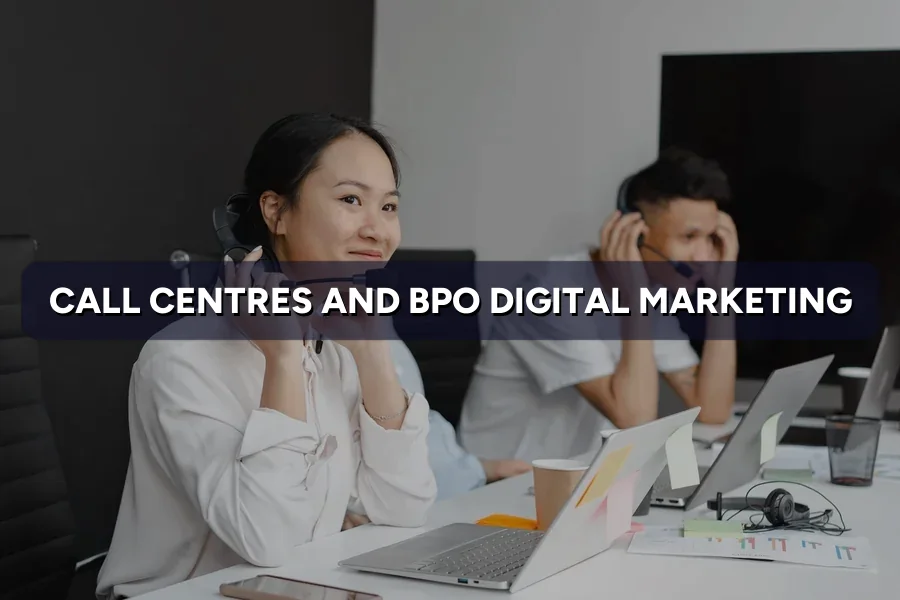
Outsourcing in Malaysia sits inside a services sector that is genuinely growing. DOSM put services revenue at RM714.7 billion in the second quarter of 2026, up 11.2 per cent on the same quarter a year earlier.
Employment tells the harder half of the story. The same release counted 4.7 million people working in services, a rise of only 2.3 per cent. Revenue is climbing considerably faster than headcount, which is exactly the gap an outsourcing provider exists to fill.
If you run a contact centre, a shared services operation, a finance-and-accounting or back-office practice anywhere in Malaysia, this guide applies the IZI Blueprint, the four-phase method we use in consulting engagements, to digital marketing for call centres and BPO specifically.
Finding real BPO clients without brokers
Source video: 2 Ways to Get BPO Clients Without Brokerage Fees | BPO | Ameya Damle
PART 2 · THE MARKET
What the Malaysian Outsourcing Market Actually Looks Like
IN BRIEFA services economy growing revenue far faster than headcount, with buyers split between offshore principals and Malaysian companies that have quietly run out of people. That split is why being found in search matters more here than in most B2B trades.
Four things make this industry behave unlike any other Malaysian B2B service.
- No licence gates the trade. Anyone can register a company and call it a BPO, so your published evidence does the credentialling a licence does elsewhere.
- Two completely different buyers. An offshore principal choosing a delivery location and a Klang Valley SME drowning in invoices need different words entirely.
- Procurement reads before it calls. Most of the evaluation happens on your website while you have no idea it is happening.
- Brokers dominate the noise. A large share of inbound “leads” are intermediaries selling the same project to five providers at once.
Malaysia has spent two decades marketing itself as a services destination, backed by MDEC’s Malaysia Digital initiative. Plenty of demand, plenty of providers, and almost nobody publishing anything a procurement officer could actually use.
PART 3 · DIAGNOSE
How Companies Actually Choose a BPO Partner
IN BRIEFA cost pressure appears, somebody builds a shortlist quietly, and only then does a call happen. The cycle runs far longer than the emergency-driven one behind HR consultancy enquiries, and far more of it is invisible to you.
Follow the real sequence before funding any part of it.
- A cost or capacity problem lands on someone’s desk. A hiring freeze, a margin review, a support queue nobody can staff.
- They research quietly, for weeks. Comparing locations, reading provider sites, asking peers. You do not appear in any CRM at this stage.
- A shortlist of three to five is drawn. Built from search, referrals and whoever their advisers already know.
- Security and compliance are checked first. Data handling, certifications and continuity plans come before price for any serious buyer.
- Only then does anyone contact you. By the time your phone rings, most of the decision has already been made.
Steps two and three are where the contract is won or lost. Publish what the shortlist is built from and you get into the room before the room exists.
Getting enquiries, but mostly from brokers?
A Blueprint diagnosis traces every enquiry from first search to signed contract and names where the qualified ones stop. Meet IZI Digital Marketing
PART 4 · DIAGNOSE
Where BPO Companies Lose Deals Before the First Call
IN BRIEFSix leaks account for most of the pipeline that never reaches you, and five of them cost nothing but a fortnight of writing. Closing the free ones before buying traffic is the order of work we apply across every industry we serve.
Run this audit on your own site, reading as a procurement manager with a shortlist to build and one afternoon to build it.
- One page listing every service. Customer support, finance and accounting, and data annotation are three different searches from three different departments.
- Nothing about security. No data handling statement, no certifications, no continuity plan. The first filter in the process, and you left the box empty.
- No capacity figures. Buyers need to know you can absorb their volume. Vagueness here reads as “too small” every time.
- Client evidence that names nobody. “A leading telco” persuades nobody. Anonymised numbers with real scope do.
- No language or shift coverage stated. Mandarin, Bahasa, Japanese, 24/7 rosters. Often the entire reason Malaysia made the list.
- A contact form and a three-day reply. Offshore buyers move to the next name while you are still routing the enquiry internally.
PART 5 · DESIGN
Which Channel Deserves Your First Ringgit?
IN BRIEFSearch finds the buyers already shopping for a location; outbound finds the ones who have not admitted they need help yet. Funding one properly beats running all four badly, a pattern IT support firms hit for the same reason.
Judge each option on four things: speed to a signed contract, the monthly floor it needs, the buyer it reaches, and how much senior time it consumes.
DECISION BOX · FIRST CHANNEL FOR A MALAYSIAN BPO
| Option | Speed to a signed contract | Monthly floor | Who it reaches | Senior time |
|---|---|---|---|---|
| One page per service line, plus a security page | 4–9 months | One-off build | Anyone building a shortlist | High, then none |
| Search ads on service and location terms | 2–5 months | RM 4,000+ | Buyers already comparing providers | Low once set up |
| Targeted outbound to named accounts | 3–8 months | RM 6,000+ | Companies not yet shopping | High, and permanent |
| Founder-led LinkedIn and industry events | 6–12 months | RM 1,500+ | Advisers and referral sources | Very high |
Verdict: Build the service and security pages first, because every other channel sends traffic to them and fails without them. Add search advertising once those pages exist and one service line already sells reliably. Choose outbound ahead of ads only if you have a genuine named-account list and a person who will work it every week; done occasionally it produces nothing.
PART 6 · DESIGN
Setting a Budget From What One Contract Is Worth
IN BRIEFA BPO contract is worth years of monthly billing, so the maths runs on total account value rather than a first invoice. It is the same long-horizon calculation that decides budgets for translation providers selling retained work.
Work through five numbers instead of copying last year’s figure.
- Take your average monthly contract value. What you actually invoice per client, not the largest deal you ever signed.
- Multiply by realistic tenure. Twenty-four to thirty-six months is honest planning for most Malaysian providers.
- Deduct delivery cost. Agent salaries, supervision, floor space, technology, and the ramp-up months before a new account is profitable.
- Set the affordable cost per signed contract. Decide what share of that margin you will pay, then work back through your enquiry-to-contract rate.
- Cap spend at ramp-up capacity. Three new accounts at once against one training team produces slow starts, and a slow start is how you lose year two.
Want a second opinion on your cost-per-contract ceiling?
Bring last year’s proposals, your win rate and your ramp-up schedule, and we rebuild the ceiling from your own numbers. See how we read conversion data
PART 7 · DESIGN
Website, Proof and the Trust Signals Procurement Actually Checks
IN BRIEFYour site has one job: get a buyer far enough through their own due diligence that a meeting becomes the obvious next step. Capacity, security and language coverage all need to be crawlable text before search can work for you at all.
No statute licenses BPO work in Malaysia, which sounds like freedom and is actually a problem: you must manufacture the trust a licence would have supplied. Four signals do most of that work.
- Your data obligations, stated openly. You process other people’s customer records, so the Personal Data Protection (Amendment) Act 2024 applies squarely to you. Publish how you store and transfer it.
- A data protection officer, named. The Commissioner’s guidelines on appointing a DPO set out when the duty bites. Naming a person beats any footer badge.
- Malaysia Digital status, if you hold it. MDEC’s designation is a recognised marker for offshore buyers weighing a delivery location.
- Capacity, in plain numbers. Seats, agents, languages, shifts and sites. Every buyer needs these and almost nobody publishes them.
PART 8 · DEPLOY
The First 90 Days, in Sequence
IN BRIEFTwo weeks diagnosing, two designing, then the free foundations built properly before any paid reach. The usual doubt about whether writing pays off for B2B settles quickly here, because your service pages are the proposal buyers read first.
How to roll out digital marketing for call centres and BPO in 90 days
Six steps, in order.
- Weeks 1–2: Diagnose. Run the Part 4 audit as a buyer would, then count last year’s enquiries, proposals and signed contracts by source and by service line.
- Weeks 3–4: Design. Pick the first channel from the Decision Box and set the spending ceiling from the margin on a three-year account.
- Weeks 5–7: Publish one page per service line. Scope, typical team shape, languages, shift coverage and an indicative commercial model for each.
- Weeks 8–9: Build the security and capacity pages. Data handling, certifications, continuity, seat count and sites. Write these as if answering a due diligence questionnaire.
- Weeks 10–11: Fix the reply routine. One named owner, a stated response window, and a qualification question that separates brokers from principals on the first reply.
- Weeks 12–13: Deploy one paid channel and read it. Fund it to its floor for a full quarter, then use the Part 10 numbers to scale, hold or stop.
PART 9 · DEPLOY
Local Visibility: Google Business Profile and Client Reviews
IN BRIEFNobody walks into a BPO, but every offshore buyer checks that the operation physically exists. The listing is a legitimacy test rather than a lead channel, and the wider case sits in our local SEO work.
Google’s guidance on improving local ranking names relevance, distance and prominence, and states plainly that no payment improves a map position.
- List each delivery site separately. A Cyberjaya floor and a Penang floor are two verifiable operations, and two chances to look substantial.
- Treat employee reviews as buyer-facing. Procurement reads your staff ratings to judge attrition risk, because attrition is what breaks their service levels.
- Ask clients for the review at renewal. The moment a contract extends is the moment the client is most willing to say why.
- Photograph the real floor. Workstations, training rooms, the security door. It settles the “is this a real operation” question faster than any paragraph.
- Reply without confirming client names. Visible discretion sells in a trade built on confidentiality agreements.
BENCHMARK BRIEFING 1 OF 4
How Big Is the Services Market a Malaysian BPO Can Sell Into?
IN BRIEFRevenue growing at roughly five times the rate of headcount. Reading those two lines together tells you which pitch to lead with, much as published fees reframed the market for clinics that publish pricing.
| Measure | Q2 2026 | Reading for a BPO |
|---|---|---|
| Services revenue | RM714.7 billion | The work is there and it is growing |
| Revenue growth, year on year | 11.2% | Against 2.3% employment growth — the key signal |
| Services employment | 4.7 million | Only 11.6 thousand added in the quarter |
| Salaries and wages | RM35.6 billion | Up 4.8% — in-house cost is rising |
| Revenue growth, quarter on quarter | 4.9% | Volume pressure arriving faster than hiring can answer |
| Prior quarter revenue (Q1 2026) | RM682.0 billion | Two consecutive quarters of the same gap |
Aggregated by IZI Digital Marketing from DOSM Quarterly Services Statistics Q2 2026 and Q1 2026. Licence.
Companies are handling far more work with barely more people. Lead every page with capacity you can prove, and keep cost savings as the second argument rather than the first.
BENCHMARK BRIEFING 2 OF 4
Where Do BPO Contracts Actually Come From?
IN BRIEFRoughly three in five signed contracts start with an offshore principal, and they arrive through completely different routes from domestic ones. Modelling the split shows why one website voice cannot serve both, a problem recruitment agencies recognise immediately.
| Buyer type | Modelled share | How they arrive | What convinces them |
|---|---|---|---|
| OFFSHORE PRINCIPALS — CHOOSING A DELIVERY LOCATION | |||
| Multilingual customer support | 23% | Search, then a long evaluation | Language and shift coverage, published |
| Finance and accounting back office | 18% | Adviser or consultancy referral | Controls, certifications, audit trail |
| Existing client expanding scope | 12% | Account management | Delivered service levels |
| Regional headquarters setting up | 9% | Agency or government introduction | Recognised status and site visits |
| DOMESTIC BUYERS — RELIEVING INTERNAL PRESSURE | |||
| Support queue nobody can staff | 15% | Search, urgent | A page naming their exact problem |
| Payroll or back-office handover | 13% | Accountant or vendor referral | Partner relationships, not ads |
| Seasonal or campaign overflow | 10% | Search or direct approach | Speed of the first reply |
Illustrative model by IZI Digital Marketing, built on published Malaysian services and outsourcing market structure. Not measured results. Licence.
Around three fifths of the contracts come from offshore principals who evaluate slowly and read everything. The domestic two fifths move fast and reward whoever answers first.
Not sure which buyer your website is written for?
We read your pages the way each buyer reads them and show you which one drops off first. See how we work as consultants
BENCHMARK BRIEFING 3 OF 4
What Does a Monthly Marketing Budget Buy a BPO Company?
IN BRIEFEye-watering costs per enquiry by consumer standards, trivial against three years of contract value. The bottom tier is carried almost entirely by pages you write once, before any paid search spend begins.
| Monthly budget and mix | Projected qualified enquiries | Enquiries | Cost each | Contracts | Three-year value |
|---|---|---|---|---|---|
| RM 3,000 — service, security and capacity pages | 4 | RM 750 | 0.4 | RM 648,000 | |
| RM 8,000 — plus client evidence and search | 9 | RM 889 | 0.8 | RM 1.30 million | |
| RM 18,000 — plus full search advertising | 16 | RM 1,125 | 1.4 | RM 2.27 million | |
| RM 32,000 — plus named-account outbound | 22 | RM 1,455 | 2.0 | RM 3.24 million |
Illustrative model by IZI Digital Marketing, assuming a RM45,000 monthly contract, 36-month tenure and a 9 per cent conversion rate. Not measured results. Licence.
Check the bottom row against your ramp-up team, not your bank balance. Two new accounts a month is a recruitment and training decision long before it is a marketing one.
BENCHMARK BRIEFING 4 OF 4
Is the Outsourcing Opportunity in Malaysia Widening or Closing?
IN BRIEFWidening, and the gap between revenue growth and hiring growth is the measure that shows it. Tracking it quarter by quarter is the most reliable demand signal available to any Malaysian B2B service provider, because it is published on a fixed calendar.
| Period | Revenue growth | Employment growth | What it means for outsourcing demand |
|---|---|---|---|
| Q1 2026 | 8.1% | 2.7% | A 5.4-point gap — pressure building |
| Q2 2026 | 11.2% | 2.3% | An 8.9-point gap — the widest of the two |
| Salaries and wages, Q2 2026 | 4.8% | — | Rising faster than headcount — cost per seat climbing |
| 2027 — modelled | Gap persists | Constrained | Sustained demand for outsourced capacity |
Compiled by IZI Digital Marketing from DOSM Quarterly Services Statistics; the 2027 row is modelled, not measured. Licence.
The direction matters more than the exact 2027 row. Quote this gap in your proposals: it is the clearest published argument that outsourcing answers a capacity problem, not just a cost one.
PART 10 · DRIVE
The Numbers That Tell You It’s Working
IN BRIEFFive numbers, read on the same day each month, settle whether the spending is paying. Qualified-enquiry share matters most, and it is read inside your own conversion tracking rather than in a year-end review.
| KPI | Where to read it | Change-of-course trigger |
|---|---|---|
| Qualified share of enquiries | Principals divided by all enquiries | Under 40 per cent for two quarters |
| Contracts signed per quarter | Executed agreements, by service line | Flat while enquiries rise |
| Cost per signed contract | Spend divided by new contracts | Above your agreed share of account margin |
| First-reply time to an enquiry | Email and CRM timestamps | Anything past one working day |
| Average account tenure | Months retained, rolling three years | Under 24 months, meaning delivery is the problem |
The last row is the one most providers skip, and it is the cheapest growth available. Keeping an account a year longer costs nothing to win.
FAQ
Common Questions About Digital Marketing for Call Centres and BPO
1. How much should a Malaysian BPO company spend on marketing each month?
Most mid-sized providers land between RM3,000 and RM18,000 a month. It depends on how many seats are unsold, because spending against a full floor only raises your cost per contract. Work from a three-year account margin, then cap the budget at what you can ramp.
2. Should a BPO publish its pricing online?
Publish the commercial model, not a rate card. It depends on how varied your work is, but explaining whether you charge per seat, per transaction or per outcome costs you nothing and filters out buyers whose expectations you could never meet.
3. Do BPO companies in Malaysia need a licence?
No statute licenses outsourcing itself. It depends on what you handle: processing customer records brings you under the Personal Data Protection Act, telephony infrastructure can attract communications licensing, and Malaysia Digital status is optional but valuable to offshore buyers.
4. Is SEO or outbound better for a BPO company?
SEO, for most providers starting out. It depends on whether your problem is being found or being considered: a buyer searching outsourcing options has already decided to outsource something. Outbound pays back later, and only if somebody works the list weekly.
5. How do BPO companies show client evidence under confidentiality?
Write anonymised case notes covering sector, volume, service levels and outcome. It depends on stripping anything identifying, which takes one careful edit. Two honest write-ups with real numbers persuade far better than a logo wall a buyer cannot verify.
THE VERDICT
Your Decision Checklist
You should now be able to make four decisions about digital marketing for call centres and BPO.
- What you are really selling. Capacity a company cannot hire fast enough, not a cheaper version of what they already do.
- Where the first ringgit goes. Service, security and capacity pages, before any advert, in almost every case.
- Which buyer you are writing for. Offshore principals evaluate slowly and read everything; domestic buyers move fast and reward the first reply.
- What would make you change course. Agreed before you spend, reviewed on the same day each month.
One honest caveat: if your floors are already full and you are turning volume away, do not hire anyone yet. Spend the year on tenure, margin and written client evidence instead.
Not sure which of these decisions your BPO should make first?
Book a free Blueprint consultation. We diagnose where qualified enquiries stop short of a contract, set your ceiling from your own account records, and hand you a sequenced 90-day plan.