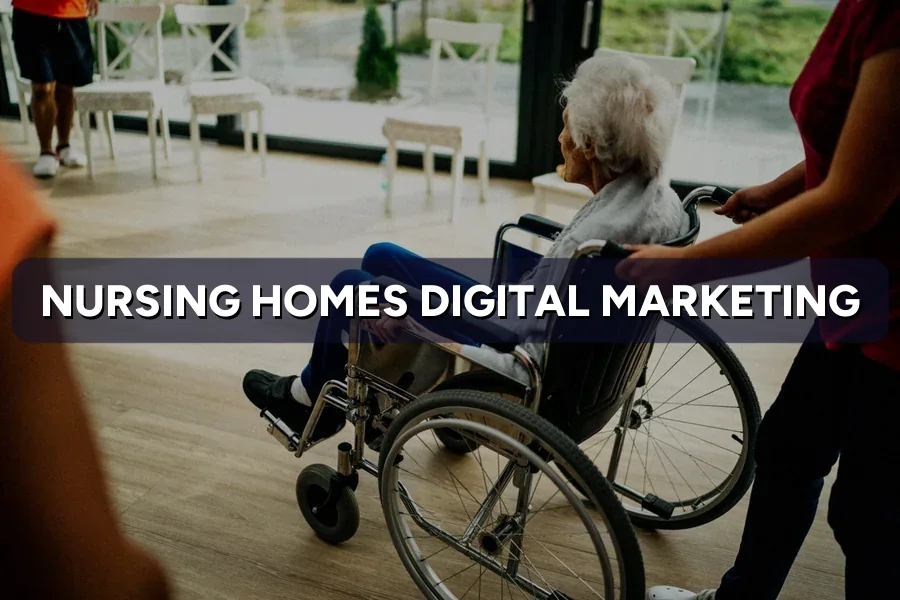
Malaysia has 441 aged care homes registered under the Care Centres Act 1993 and 28 nursing homes licensed under the healthcare facilities law. Against that, the Malaysian Caregivers Association estimates more than a thousand homes operating with no licence at all.
That single ratio explains why marketing a care home does not work like marketing a clinic. The adult daughter comparing three homes on her phone at 11pm is not looking for the best offer. She is looking for evidence that a place is real, inspected and safe to leave her mother in — and most listings she finds cannot give it to her.
This guide applies the IZI Blueprint, the four-phase method we use in consulting engagements, to nursing homes specifically. It works through the decisions in order: how families choose, where enquiries leak, which channel earns your first ringgit, and which numbers prove it worked. The video below frames the general problem first.
How to Market an Assisted Living Facility to Find More Residents
Source video: Brandon Gustafson on YouTube
PART 2 · THE MARKET
Where Malaysia’s Aged Care Market Stands in 2026
IN BRIEFDemand is rising faster than supply, and supply is mostly unverifiable. That combination is unusual among the industries we serve, and it decides where your budget should go long before you compare channels.
Three published facts set the floor under every decision in this guide.
- The customer base is growing quickly. Malaysians aged 65 and over reached 8.0% of the population in 2025, up from 7.6% a year earlier, per the Department of Statistics Malaysia.
- Fewer working adults support each older Malaysian. The old-age dependency ratio rose from 10.9 to 11.4 in a year, so more families hit the point where home care stops working.
- Verified supply is tiny. Fewer than 500 homes nationwide are registered or licensed.
You are not fighting for share in a crowded market. You are competing to be the home a family can confirm is legitimate in five minutes.
Not sure whether your problem is visibility or trust?
An hour of diagnosis usually separates the two, and they need completely different budgets. See how local search visibility is built
PART 3 · DIAGNOSE
How Do Malaysian Families Choose a Nursing Home?
IN BRIEFThe person who searches is almost never the person who moves in. An adult child, usually in her forties or fifties, runs the whole process under time pressure — a shorter and more emotional journey than the one families run when choosing a GP clinic.
Five steps repeat, and each is a different marketing job.
- A trigger event starts the clock. A hospital discharge, a fall, or a carer who can no longer cope. Rarely a decision planned months ahead.
- The search is geographic first. “Nursing home near me”, the district name, or “old folks home Puchong”. Visiting weekly matters more than your brochure.
- Legitimacy gets checked. Registration status, real photographs of real rooms, and whether the phone number reaches a person who answers.
- Siblings are consulted. Your page gets forwarded to a family group chat, so it must persuade people who never searched for you.
- A visit decides it. Nobody admits a parent sight unseen. Every online step exists to earn one visit.
Persuasion barely features. Steps one and two are findability, step three is proof, steps four and five are operations.
PART 4 · DIAGNOSE
Where Nursing Homes Leak Enquiries
IN BRIEFMost homes lose families between interest and visit, not at the advertising stage. Run this audit before approving any budget — the same order of work as fixing a weak Google Maps presence.
Six leaks account for most of the loss. Score your home honestly on each.
- Registration status is invisible. If your certificate number appears nowhere online, a cautious family assumes you have none.
- Photographs are stock images. A generic smiling elderly couple says nothing about your actual rooms and bathrooms.
- Nobody answers after 6pm. Working adults research and enquire at night, exactly when most homes go quiet.
- Fees hide behind “call us”. Families need a range to judge whether a visit is worth their Saturday. Hiding it filters out good prospects, not bad ones.
- Your listing sits in the wrong district. Homes on a council boundary often rank for neither, because the category and service area were never set.
- Nobody owns the follow-up. The enquiry lands in a shared WhatsApp number and dies between the matron and the office.
PART 5 · DESIGN
Which Channel Deserves Your First Ringgit?
IN BRIEFFor most Malaysian care homes the first ringgit belongs to local SEO, not paid media. Families search by district, and a well-built profile with real photos and reviews reaches them at a monthly cost a twelve-bed home can actually sustain.
Judge the four realistic options on what matters in a trust-led category: how fast the first enquiry arrives, what it costs monthly, and how well it fits the way families decide.
DECISION BOX · WHERE THE FIRST RINGGIT GOES
| Option | Speed to first enquiry | Monthly floor | Fit with how families decide |
|---|---|---|---|
| Local SEO and Google Business Profile | Medium — 4–8 weeks | RM 1,500+ | Strongest — district search plus reviews |
| Google Search Ads | Fast — 1–2 weeks | RM 3,000+ | Good — high intent, thin volume |
| Meta Ads | Fast — 1–2 weeks | RM 2,500+ | Mixed — reaches carers before the trigger |
| Discharge planner and GP referrals | Slow — 2–3 months | Staff time, not media | Highest trust, lowest volume |
Verdict: Choose local SEO first if your beds serve one district and your profile is thin or wrong — that is the majority of homes. Choose Meta Ads first only if you are opening a brand-new home with no reviews and need visits booked within the month.
PART 6 · DESIGN
Setting a Nursing Home Marketing Budget From Your Own Numbers
IN BRIEFBudget from resident value and empty beds, never from a package tier. A care home has a hard ceiling a hospital does not: you cannot admit a thirteenth resident into twelve beds, which changes the maths that works for private hospitals.
Work the calculation in four moves.
- Take your monthly fee and average length of stay. RM 2,800 a month across an 18-month stay is roughly RM 50,000 of revenue per admission.
- Apply your real operating margin. Staff and food are fixed costs, so use the margin your accounts show, not the one you hope for.
- Decide the share you will pay to acquire. Three to six per cent of gross resident value is defensible — roughly RM 1,500 to RM 3,000 per admission.
- Cap it at empty beds. Four vacancies and a two-month cycle means two admissions a month, not twenty enquiries a week.
PART 7 · DESIGN
Website, Photos and the Registration Proof Families Look For
IN BRIEFYour site has one job: convert a worried search into a booked visit. Regulatory proof does most of that work here, in the same way professional registration does for speech therapy centres.
Registration sits with the Social Welfare Department. Under the Care Centres Act 1993 (Act 506), any premises caring for four or more residents must be registered. Approval also needs sign-off from the local council, the Fire and Rescue Department and the district health office. Homes giving nursing-grade clinical care fall instead under the Private Healthcare Facilities and Services Act 1998.
| What to publish | Why a family cares |
|---|---|
| JKM registration certificate and number | The one claim she can independently verify |
| Carer-to-resident ratio, stated plainly | JKM sets 1:4 for bedridden or ill elderly residents |
| Dated photographs of real rooms and bathrooms | Stock imagery reads as concealment |
| Monthly fee ranges by care level | Decides whether a visit is worth the drive |
| A named person and a WhatsApp number | Turns an anonymous premises into someone accountable |
Keep every claim to what you can evidence on request, and confirm your current registration position with your state welfare office rather than copying a neighbouring home.
Have the proof but no idea how to present it?
Most homes already hold the documents families want and bury them in a filing cabinet. Decide whether to run your profile in-house
PART 8 · DEPLOY
The First 90 Days, in Sequence
IN BRIEFDigital marketing for nursing homes rewards sequence over simultaneity. Fix proof and response before buying traffic, then deploy one channel properly — starting with how enquiries arrive, which is usually WhatsApp rather than a form.
- Weeks 1–2: diagnose. Audit your Google Business Profile accuracy, current reply times, published proof and the real enquiry-to-visit rate.
- Weeks 3–4: design. Agree the budget maths against empty beds, and gather registration documents, ratios and fee bands into one approved fact sheet.
- Weeks 5–6: rebuild the proof layer. Photograph the actual home on a normal weekday, publish fee ranges and registration details, and put a named contact on every page.
- Weeks 7–8: set the response standard. One WhatsApp number, one named owner, one written reply-time target that covers evenings and weekends.
- Weeks 9–12: deploy one channel. Launch local search properly, review weekly, and hold paid media back until you know your cost per booked visit.
PART 9 · DEPLOY
Google Business Profile and Reviews for Care Homes
IN BRIEFKeep this in-house. Your profile is where nursing home SEO starts and where the last-minute trust check happens, so treat a clean Google Business Profile setup as operations work rather than marketing spend.
Care homes face a problem clinics do not: the families best placed to review you are grieving, exhausted, or both. Handle the review pipeline gently.
- Set the category and service area deliberately. “Nursing home” and “aged care centre” pull different searches, and a wrong service area costs you the district.
- Post photographs monthly, not once. Meals and communal areas shot on ordinary days beat a professional shoot from three years ago.
- Ask at the right moment. Three or four weeks after a settled admission, never at discharge or after a death.
- Reply to every review within 48 hours. Thank, acknowledge, and move clinical detail offline. Never discuss a resident’s condition in public.
- Answer the hard ones. A measured reply to a critical review persuades more readers than five glowing ones.
BENCHMARK BRIEFING 1 OF 4
How Many Malaysian Care Homes Are Actually Registered?
IN BRIEFRoughly two in three homes a Malaysian family could find are believed to be operating outside the registration system. The table below sizes that gap, and it is the single most useful number in any marketing plan we build for this sector.
| Registration status | Homes | What it means for your marketing |
|---|---|---|
| Registered under the Care Centres Act 1993 (JKM) |
441 |
Your real competitive set |
| Licensed under the healthcare facilities law (MOH) |
28 |
Clinical-grade care, a premium niche |
| Estimated to operate with no licence |
1,000+ |
Competes on price, cannot compete on proof |
| Homes a family can independently verify |
469 of ~1,469 |
About 32% of visible supply |
Aggregated by IZI Digital Marketing from Malaysian Caregivers Association figures reported by CodeBlue, August 2026. Licence.
One structural detail explains the gap. The Private Aged Healthcare Facilities and Services Act 2018, gazetted to give aged care a single licensing regime, has never been brought into force. There is no one badge to point at, which is why the paperwork you do hold carries so much weight.
BENCHMARK BRIEFING 2 OF 4
How Long Do Families Take to Choose a Care Home?
IN BRIEFIt depends entirely on what triggered the search. A hospital discharge closes in days; a slow decline at home takes weeks. The model below splits enquiries by trigger so you can match your response speed and your review pipeline to each one.
| Trigger event | Share of enquiries (%) | Decision window | Checked first |
|---|---|---|---|
| Hospital discharge with new care needs | 34 | 3–7 days | Bed available this week |
| Gradual decline at home | 27 | 4–10 weeks | Photos and daily activities |
| Family carer burnout or carer leaving | 23 | 2–4 weeks | Fees and respite options |
| A fall or a health scare | 16 | 1–3 weeks | Overnight nursing cover |
Illustrative model by IZI Digital Marketing, built on JKM care centre categories and published lead-response research. Licence.
The practical read: a third of your enquiries decide inside a week, so a same-day reply is not customer service. It is the whole campaign.
BENCHMARK BRIEFING 3 OF 4
What Does a Nursing Home Marketing Budget Actually Buy?
IN BRIEFReturns flatten quickly, because a district only holds so many families searching in a given month. The ladder below models monthly enquiries at four spend tiers, which is also the clearest way to see where local SEO beats paid search.
| Monthly spend | Family enquiries | Per month | Honest scope |
|---|---|---|---|
| RM 1,500 | 12 | Profile, photos and reviews only | |
| RM 3,000 | 25 | Local SEO plus a small search budget | |
| RM 6,000 | 44 | Search and social across two districts | |
| RM 12,000 | 66 | Several homes or state-wide, plus content |
Illustrative model by IZI Digital Marketing, built on published Malaysian local search advertising benchmarks. Licence.
Doubling spend from RM 6,000 to RM 12,000 adds about half as many enquiries again, not double. For a single home with four empty beds, the second tier is usually the honest answer.
Want this ladder rebuilt on your own fees and vacancy count?
Swap our figures for yours and the right tier usually settles the argument in one sitting. Weigh up whether local SEO pays for a single site
BENCHMARK BRIEFING 4 OF 4
How Fast Is Malaysia’s Elderly Population Growing?
IN BRIEFMalaysia added roughly half a percentage point to its over-65 share in a single year. Extend that pace and the pool of families needing a bed grows every quarter, which changes how a home should think about building local search visibility now rather than later.
| Indicator | 2024 | 2025 | 2027* | 2030* |
|---|---|---|---|---|
| Population aged 65+ (% of total) |
7.6 |
8.0 |
8.8 |
10.0 |
| Old-age dependency ratio (per 100 working age) | 10.9 | 11.4 | 12.4 | 14.1 |
| Median age (years) | 30.9 | 31.3 | 32.1 | 33.3 |
2024 and 2025 reported by DOSM; * modelled projection on the 2024–2025 trend, not measured results. Licence.
Every point on that curve is a family that will search for a bed. Homes that own their district’s search results before 2028 will not have to bid for them afterwards.
PART 10 · DRIVE
The Numbers That Tell You Nursing Home Marketing Is Working
IN BRIEFTrack five numbers monthly, and make occupancy the one that settles arguments. Digital marketing for nursing homes produces very few enquiries compared with retail, so every one needs proper conversion tracking to be counted at all.
- Cost per booked visit. Not per click or per message, but per family that walks through your door.
- Visit-to-admission rate. The number most within your control, and the cheapest to improve.
- Median first-response time. Measure the median and the worst hour of the week, because averages hide your evenings.
- Occupancy and average length of stay. Together these show whether marketing is filling beds or churning them.
- Review velocity per listing. New reviews per month and the direction of the rating, not the lifetime average.
Agree in advance what would change your mind. If cost per booked visit has not settled within three months on a funded channel, the problem is your proof or your response, not the channel.
FAQ
Frequently Asked Questions
1. How much should a Malaysian nursing home spend on marketing each month?
Between RM 1,500 and RM 6,000 a month suits most single-site homes. The right figure depends on how many beds are empty and how long residents stay. A home with two vacancies does not need RM 10,000; it needs two admissions and a waiting list.
2. Do I need JKM registration before I advertise my care home?
Yes, and treat that as non-negotiable. Running an unregistered care centre is an offence under the Care Centres Act 1993, and advertising only makes an unregistered home easier to find. Register first, then market the fact that you hold it.
3. Is SEO or paid advertising better for nursing home enquiries?
Local SEO usually wins for care homes. Families search by district and read reviews before clicking anything, so a strong profile earns enquiries at a far lower monthly cost. Add paid search once you know your cost per booked visit.
4. Should we publish our monthly fees online?
Publish a range rather than an exact figure. Families use price to judge whether visiting is worth their Saturday, so hiding it mostly filters out serious prospects who assume the worst. A banded range by care level keeps you flexible.
5. How do we ask families for reviews without seeming insensitive?
Ask three to four weeks after a settled admission, never at discharge or after a death. The relief a family feels once a parent has adjusted is real, and that is the moment to ask in person. A steady trickle beats a sudden batch.
THE VERDICT
Your Decision Checklist
Digital marketing for nursing homes comes down to four decisions you should now be able to make without another meeting.
- What proof goes public this month. Registration details, carer ratios, fee bands and real photographs — before a ringgit goes anywhere else.
- Which channel earns the first ringgit. Local search for almost every single-site home; paid media only once the proof layer is live.
- What the response standard is. One number, one named owner, one written reply-time target that survives evenings and weekends.
- What number ends the argument. Cost per booked visit, reviewed monthly against occupancy.
And one honest caveat: if your enquiries currently go unanswered overnight, do not hire anyone yet. Fixing that costs nothing and will move your numbers more than any campaign.
Not sure which of these moves fits your care home?
Book a free Blueprint consultation — we will diagnose where your enquiries leak, design the proof and budget decisions with you, and hand you a sequenced 90-day plan you can run with anyone.