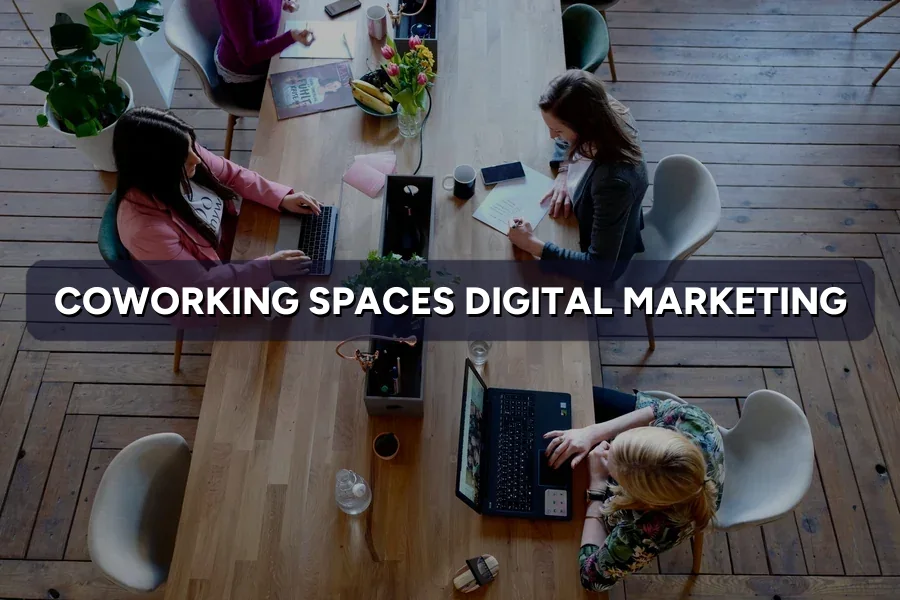
Malaysia had 3.15 million own-account workers in April 2026, people working for themselves with no staff, according to the Department of Statistics Malaysia’s Labour Force Statistics, April 2026. That is roughly one in five of everyone working in the country.
Almost none of them will ever type the word “coworking” into Google. They search for a quiet place to take calls, a printer, an address they can put on an invoice, or a meeting room for Tuesday afternoon.
This guide applies the IZI Blueprint, the four-phase method we use in consulting engagements, to coworking operators specifically. It treats digital marketing for coworking spaces as a sequence of decisions rather than a list of tactics. Who actually signs a membership, where the tour request leaks, which channel earns the first ringgit, and which number tells you it worked. The video below frames the general problem before we get to the Malaysian specifics.
Marketing magic: multi-channel strategies to attract coworking space members
Source video: Marketing magic: multi-channel strategies to attract coworking space members on YouTube
PART 2 · THE MARKET
Where Malaysian Coworking Spaces Stand in 2026
IN BRIEFThe pool of people who could take a desk is large and still growing, while the supply of desks has grown faster in the Klang Valley than anywhere else. That turns the job from awareness into being the obvious local choice, which is a local search problem before it is an advertising one.
Three published figures set the floor under every decision that follows.
- The solo-worker pool is deep. 3.15 million own-account workers were counted in April 2026, alongside 12.61 million employees, on DOSM’s monthly labour figures.
- Small firms are growing faster than the economy. MSME value added rose to RM689.8 billion in 2025, up 5.7 per cent against national GDP growth of 5.2 per cent, per DOSM’s MSMEs Performance 2025 release.
- Your catchment is a commute, not a city. A member chooses by parking and traffic, so a space in Damansara competes with four neighbours, not with every operator in Kuala Lumpur.
Nobody needs national reach. Marketing for coworking spaces is won by being the first credible result inside a twenty-minute drive.
PART 3 · DIAGNOSE
How Do Malaysians Choose a Coworking Space?
IN BRIEFThe decision is made twice: once on a phone in about four minutes, and again during a ten-minute tour. The shortlist almost always forms on Google Maps before anyone opens a website, which is why the listing outranks the brochure in importance.
Five moments, in the order they happen.
- A trigger at home or at work. A lease ending, a team outgrowing the dining table, or a landlord demanding a three-year commitment.
- A map search bounded by traffic. “Coworking space Puchong”, “office space near me”, “meeting room KL” — rarely more than twenty minutes from home.
- The price and parking check. If the rate is hidden or parking is unexplained, the tab closes and a competitor gets the enquiry.
- A WhatsApp message, usually outside office hours. Two questions almost every time: how much per month, and can I see it this week.
- One tour, then a day pass. The tour sells the room; the day pass sells the commute, the wifi and the noise level.
Step three is where most operators lose the enquiry without ever seeing it happen.
PART 4 · DIAGNOSE
Where Coworking Spaces Leak Enquiries and Members
IN BRIEFSix leaks account for most lost members, and five cost nothing to close. Nearly all sit between the map listing and the tour, which is where a complete Business Profile starts earning its keep.
Open your own listing on a phone tonight and read it as a freelancer with ten minutes and three tabs open.
- No price anywhere. “Contact us for rates” reads as expensive and hands the comparison to whoever published a number.
- No floor plan or desk-type list. Hot desk, fixed desk, private suite and virtual office are four different products bought by four different people.
- Parking left unexplained. In the Klang Valley this is a bigger objection than the monthly rate, and almost nobody addresses it.
- Slow replies after six o’clock. Most enquiries arrive at night, and a next-morning reply lands after two competitors have already answered.
- Meeting rooms buried. Room hire is the cheapest way to get a future member through the door, yet it sits three clicks deep.
- No contact before renewal. The member goes quiet in month five, and the churn arrives as a surprise on the invoice run.
Not sure which of those six leaks costs you the most desks?
We walk the listing, the pricing page and the reply flow the way a cautious freelancer would, before any budget is committed. Meet IZI Digital Marketing
PART 5 · DESIGN
Which Channel Deserves a Coworking Space’s First Ringgit?
IN BRIEFCoworking is one of the few local services where people search with real intent and a clear budget, so the listing comes first and search ads second. Social is a retention and reputation asset here, closer to the local SEO versus Google Ads trade-off than to a brand campaign.
Four criteria settle the order: how fast it produces a booked tour, what it costs to run at all, which buying moment it catches, and what it asks of a community manager who is already running the floor.
DECISION BOX · FIRST CHANNEL FOR A COWORKING SPACE
| Option | Speed to first tour | Monthly cost floor | Moment it serves | Owner time |
|---|---|---|---|---|
| Business Profile and reviews | 2–4 weeks | RM 0 | The map search | Low, but weekly |
| Google Search Ads | 3–10 days | RM 1,500+ | The active search | Medium, needs a landing page |
| Meta Ads and Instagram | 2–6 weeks | RM 800+ | The early prompt | High, needs fresh footage |
| Community events and partners | 4–12 weeks | Refreshments and staff time | Peer-to-peer trust | High, and never ends |
Verdict: Start with the Business Profile and a steady review flow, because the demand already exists in your suburb and capturing it costs nothing. Add search ads once the price, floor plan and parking answer are published, then treat Meta and community events as retention work rather than as the occupancy engine.
Which surface carries a secondary coworking space advertising budget is a separate call, and we set the reasoning out in our read on whether a B2B audience changes the channel mix.
PART 6 · DESIGN
Setting a Coworking Space Marketing Budget From Your Own Numbers
IN BRIEFFour numbers set the ceiling: monthly rate, months a member stays, desks actually free, and how many tours your team can run in a week. Empty desks are a wasting asset, which makes this maths sharper than it is for a self storage operator selling units.
A percentage-of-revenue rule cannot see the thing that actually limits you: a fixed number of desks that earn nothing while they sit empty. Build the number from the floor instead.
- Monthly rate. Say RM550 for a fixed desk, realistic across most Klang Valley suburbs outside the city centre.
- Months retained. From last year’s member list, not from your best member. Eleven months is honest for a fixed desk.
- Member lifetime value. Roughly RM6,050, before meeting-room hire and printing.
- Affordable acquisition cost. A fifth of that, about RM1,210 per new member.
- Desks genuinely free. Only the ones you could hand over on Monday, not the suite you are holding for a maybe.
- Your real ceiling. Free desks multiplied by RM1,210, not RM1,210 on its own.
PART 7 · DESIGN
Licences, Member Data and Trust Foundations for an Operator
IN BRIEFA member signing a monthly agreement is buying continuity first and design second. Three proofs carry that weight: a council licence, a clear fire and building position, and a written rule on member data, the same instinct that governs how a clinic handles patient details.
Coworking sits across three obligations, and most operator websites mention none of them.
- A local council premise and signboard licence. Issued by your own PBT, for example through DBKL’s licensing department in Kuala Lumpur. Conditions and permitted use differ by council, so verify yours directly rather than copying a neighbour.
- A clear fire safety and building-use position. Occupancy limits, escape routes and the building’s fire certificate sit with the landlord and Bomba, but a member bringing twelve staff will ask you. Have the answer written down.
- A written rule on member and visitor data. Sign-in logs, access records and CCTV are personal data, and the Personal Data Protection (Amendment) Act 2024 introduced staged obligations from 2025, including breach notification.
Say all three on the page, alongside your notice period and what happens to a virtual-office client’s mail. Each answers a question a careful member would rather not ask aloud.
PART 8 · DEPLOY
The First 90 Days of Coworking Marketing, in Sequence
IN BRIEFOrder matters more than effort. Diagnose, design, build the free foundations, then buy search demand. Give the tour page real photographs of your actual floor on a working Tuesday, never a staged shot of an empty room, which is the same discipline property developers apply to show units.
How to roll out digital marketing for coworking spaces in 90 days
Six steps, in order.
- Weeks 1–2: Diagnose. Run the Part 4 audit, then sort last year’s members by source, months stayed and desk type.
- Weeks 3–4: Design. Choose the first channel from the Decision Box and set the ceiling from rate, retention and genuinely free desks.
- Weeks 5–6: Build the free foundations. Publish the rate card, a floor plan, the parking answer, the notice period and the nearest station.
- Weeks 7–8: Fix the tour path. One WhatsApp number and one saved reply carrying the rate, two tour slots this week and the day-pass option.
- Weeks 9–10: Build the review pipeline. Ask in month two of a membership, when the member has an opinion but has not yet become furniture.
- Weeks 11–12: Deploy one paid channel. Fund search ads to their floor for a full month, then read the Part 10 numbers before touching anything.
PART 9 · DEPLOY
Local Visibility: Google Business Profile and Member Reviews
IN BRIEFYour catchment is measured in driving minutes, so the map listing does more work here than anywhere else you could spend an hour. That makes review management the highest-return unpaid work available to an operator.
Distance is one of the three factors Google names in its guidance on improving local ranking, which decides who ever sees you at all.
- List each product as its own service. Hot desk, fixed desk, private office, meeting room and virtual office are separate searches with separate buyers.
- Put the starting rate in the profile. Most operators leave this blank and lose the enquiry at the comparison step.
- Photograph the floor in use. A Tuesday at eleven, not a styled empty room at dawn; prospects are buying the noise level.
- Ask in month two, not at renewal. Late enough to have an opinion, early enough that the opinion is still warm.
- Reply to every review within a day. Undecided prospects read your replies about parking and noise more closely than the reviews themselves.
Operators who also broker suites will recognise the pattern we set out for agents handling property listings, where the viewing-to-signature gap decides the month.
BENCHMARK BRIEFING 1 OF 4
How Many Malaysians Could Actually Use a Coworking Desk?
IN BRIEFA 120-desk space at healthy occupancy needs about 102 members, and a 250,000-resident catchment holds roughly 22,900 own-account workers. You need under half a per cent of them, which is the most useful figure in this guide and one we run for every local operator we advise.
| Measure | Figure | Where it comes from |
|---|---|---|
| Malaysia labour force, April 2026 | 17.33 million | DOSM, published |
| Employed persons | 16.82 million | DOSM, published |
| Employees on a payroll | 12.61 million | DOSM, published |
| Own-account workers | 3.15 million | DOSM, published |
| Own-account share of employed | 18.7% | Derived from the two rows above |
| Employed persons per 100,000 residents | 48,900 | Derived against the 2026 population |
| Own-account workers in a 250,000-resident catchment | 22,900 | Derived |
| Members to fill 120 desks at 85% occupancy | 102 | Capacity assumption |
| Share of local solo workers needed | 0.45% | Derived |
Aggregated by IZI Digital Marketing from DOSM Labour Force Statistics, April 2026 and Current Population Estimates, 2026. Labour rows are DOSM’s; catchment and occupancy rows are derived by IZI Digital Marketing. Licence.
Read the last row before you buy any reach. An operator needing 0.45 per cent of the solo workers nearby does not have an awareness problem; it has a findability and follow-up problem.
BENCHMARK BRIEFING 2 OF 4
Which Malaysian States Have the Deepest Working Population?
IN BRIEFParticipation is highest in Putrajaya, Selangor and Kuala Lumpur, which is where desk supply is thickest and competition hardest. For a second location that argues for the edge of a high-participation state rather than the centre of it, and for suburb-level local search over city-wide bidding.
| State | Relative participation, 2025 | LFPR | What it means for an operator |
|---|---|---|---|
| W.P. Putrajaya | 79.0% | Dense but narrow demand; meeting rooms outsell desks | |
| Selangor | 78.4% | Deepest pool; suburb-level search wins over city bidding | |
| W.P. Kuala Lumpur | 75.8% | Highest demand and the highest click prices to match | |
| Pulau Pinang | 72.2% | Thinner supply; the listing alone can carry occupancy | |
| Johor | 72.0% | Cross-border demand rewards clear virtual-office terms | |
| Malaysia | 70.8% | The national baseline, itself a record high |
Aggregated by IZI Digital Marketing from the DOSM Labour Force Survey 2025. Bars are drawn on a full nought-to-one-hundred scale from the LFPR column; the operator column is IZI Digital Marketing’s reading. Licence.
The spread is narrower than most operators assume. Participation is high almost everywhere, so the difference between a full space and a half-empty one is local competition, not local demand.
Weighing up a second location?
The demand question is usually settled before the lease question, and it is cheaper to answer. See how we size B2B demand
BENCHMARK BRIEFING 3 OF 4
Which Enquiry Source Produces a Member Who Stays a Year?
IN BRIEFPaid social produces the most enquiries and the weakest ones; referrals produce the fewest and the strongest. Modelling a quarter shows why an operator should fund the map listing and search demand before chasing reach on social.
| Source | Enquiries per quarter | Attend a tour | Sign up | Still a member at 12 months |
|---|---|---|---|---|
| EARNED SOURCES | ||||
| Referral from a current member | 9 | 78% | 61% | 74% |
| Google Maps listing | 26 | 64% | 41% | 62% |
| Walk-in from the building lobby | 6 | 83% | 47% | 55% |
| MEDIA SOURCES | ||||
| Google Search Ads | 31 | 52% | 33% | 51% |
| Meta Ads and Instagram | 24 | 38% | 21% | 39% |
| PARTNER SOURCES | ||||
| Community and partner events | 11 | 70% | 44% | 66% |
Illustrative model by IZI Digital Marketing, built on a 120-desk space and the catchment maths in Briefing 1. Tour and sign-up rates are expressed against enquiries. Not measured results. Licence.
Multiply the columns and the ranking shifts. Search ads produce ten sign-ups and five members still there a year later; the map listing produces eleven and seven, for nothing. Volume and value do not point the same way.
BENCHMARK BRIEFING 4 OF 4
Is Malaysia’s Small-Business Base Growing or Stalling?
IN BRIEFSmall-firm output is growing faster than the economy and faster than small-firm headcount, which means the same number of people are generating more value. Carried forward, that favours private suites and meeting rooms over hot desks, and it changes which of the local SEO tools are worth paying for.
| Year | MSME value added | MSME employment | Value added per worker | Change vs 2024 |
|---|---|---|---|---|
| 2024 | RM652.8 billion | 7.97 million | RM81,931 | — |
| 2025 | RM689.8 billion | 8.09 million | RM85,299 | +5.7% |
| 2028* | RM814.6 billion | 8.46 million | RM96,200 | +24.8% |
| 2030* | RM910.1 billion | 8.72 million | RM104,300 | +39.4% |
Derived by IZI Digital Marketing from the DOSM MSMEs Performance 2025 release. *Modelled projection carrying forward the observed 5.7 per cent value-added growth, 1.5 per cent employment growth and 4.1 per cent productivity growth, not measured results.
Output per worker rising faster than headcount is the signal worth acting on. Small firms are getting more valuable without getting much bigger, and a two-person firm billing more can afford a private room.
Want these four briefings run on your own member list?
Swap our national figures for your suburb, your rate card and your actual churn, and the answers move quickly. See the sectors we advise
PART 10 · DRIVE
The Numbers That Tell an Operator the Marketing Is Working
IN BRIEFFive numbers, read on the same date each month, tell you whether the spend paid. Track desk occupancy and month-six retention rather than follower counts, because a busy tour diary and a half-empty floor is the standard failure in this trade.
| KPI | Healthy range | What it tells you |
|---|---|---|
| Desk occupancy | 80–90% of sellable desks | Whether more spend is even useful |
| Month-six retention | 65–80% | Whether you bought members or just trials |
| Cost per signed member | Below RM1,210 at a RM550 rate | Whether the member pays for herself |
| Enquiry-to-tour rate | 55–70% | Whether your reply flow is losing warm people |
| Median first-reply time | Same evening, before midnight | Whether after-hours enquirers reach you at all |
Write the stopping rule before the first invoice: two consecutive months of rising cost per signed member, or occupancy above 90 per cent while ads are still running. Both mean stop, for opposite reasons.
FAQ
Frequently Asked Questions
1. How much should a Malaysian coworking space spend on marketing each month?
Most single-location operators should start between RM1,500 and RM4,000 a month. It depends on how many desks are genuinely free, because there is no value in members you cannot seat. Count those desks first, then spend up to a fifth of the lifetime value of the members you could actually absorb.
2. Do coworking spaces in Malaysia need a licence?
Yes, and the conditions vary by council. It depends on your building and its permitted use: every operator needs a premise and signboard licence from its own local council, and the building’s fire safety position belongs to the landlord. Verify both directly rather than assuming a neighbour’s approval covers you.
3. Should a coworking space publish its desk rates online?
Publish the starting rate for every desk type. It depends on your positioning only in how you frame value, never in whether you show a number. Hiding the rate loses the organised freelancer who was comparing three spaces on a Sunday night and had time for exactly one message.
4. Is Google Ads or Instagram better for filling a coworking space?
Google Ads, in almost every case. It depends on what you need the channel to do: search catches somebody who has already decided they need a desk this month, while Instagram reaches people who might, one day. Use social to keep current members visible and referring instead.
5. How long before marketing fills a new coworking space?
Expect three to six months to reach healthy occupancy. It depends heavily on your suburb’s existing supply, because a crowded corridor takes longer than a thin one. Search ads work faster, within a fortnight, but only if the rate, floor plan and parking answer are already published.
THE VERDICT
Your Decision Checklist
Four decisions, and you have enough here to make every one of them this week.
- Where the first ringgit goes. The Business Profile and a steady review flow, then Google Search Ads inside a tight radius once the rate card is live.
- What your ceiling is. A number produced by your rate, your retention and your genuinely free desks, not a package tier from a proposal.
- What the page must publish. The rate card, a floor plan, the parking answer, the notice period and the council licence position.
- What would make you stop. A trigger written down in advance and checked on the same date each month.
One honest caveat: if you are above 90 per cent occupancy and members renew without being chased, hire nobody yet. Raise the rate on the next three sign-ups and watch whether anything breaks. Buying enquiries you have no desks for only builds a waiting list you are not charging for.
Not sure which of these decisions comes first?
Book a free Blueprint consultation. One session across your member list, your rate card and what your listing actually tells a freelancer, and you leave with a 90-day order of play your own team can run.